News
ASEAN Climate Week 2026: Philippines Leads Regional Shift from Policy to Action
By ExFunCity News Desk · 28 Apr 2026

TL;DR — Discover how the Philippines is leading the 2026 ASEAN Climate Week to turn regional climate policies into bankable, locally-driven resilience projects.
ASEAN Climate Week 2026: Philippines Leads Regional Shift from Policy to Action
Kuala Lumpur and the broader Southeast Asian region are turning their attention to Manila this week as the Philippines officially hosts ASEAN Climate Week (ACW) 2026. Running from April 27 to May 1, the event marks a decisive pivot in regional climate diplomacy. Department of Environment and Natural Resources (DENR) Secretary Juan Miguel Cuna opened the summit with a clear mandate: it is time to move beyond signing treaties and start delivering measurable results on the ground. This shift toward "Implementation over Ambition" is designed to protect the most vulnerable communities from the escalating risks of climate change.
From Commitments to Concrete Delivery
For years, ASEAN nations have updated their Nationally Determined Contributions (NDCs) with high-level goals. However, ACW 2026 aims to translate these goals into bankable projects that can attract international investors. The Philippines is leading by example, showcasing initiatives that integrate land titling with climate-resilient infrastructure. By focusing on practical outputs rather than just policy frameworks, the region hopes to accelerate the actual construction of seawalls, reforestation of mangroves, and rehabilitation of critical watersheds.
Scaling Up Localized Resilience Programs
A central theme of this year's summit is "Localism." The Philippine leadership argues that climate adaptation happens at the municipal and barangay levels.
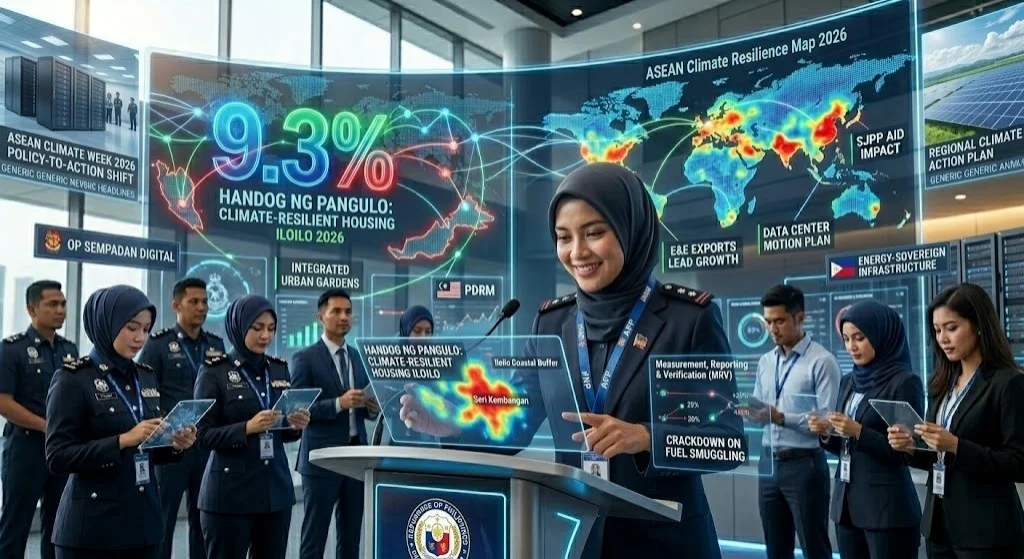
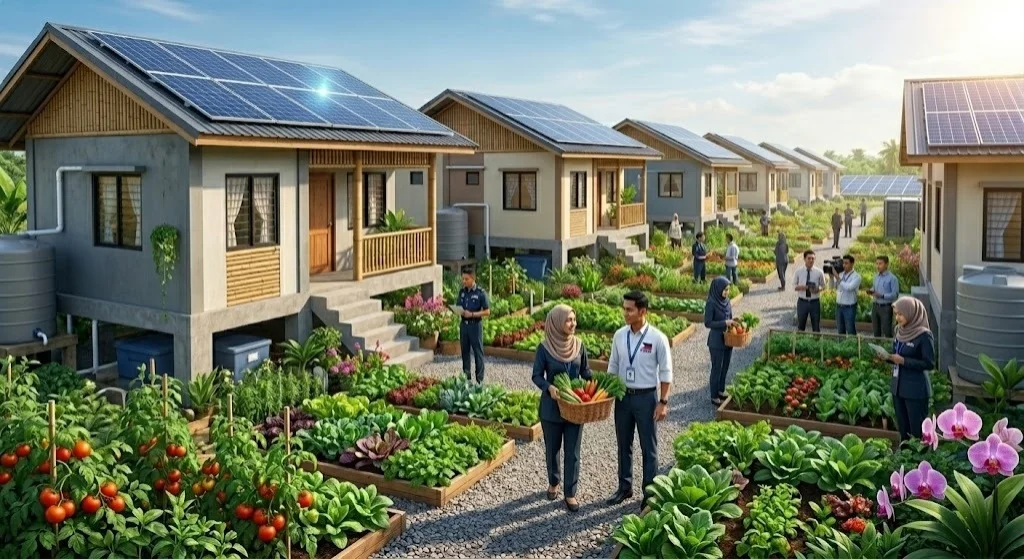
- Integrated Housing: The "Handog ng Pangulo" initiative serves as a model, featuring energy-efficient, solar-ready designs for disaster-prone areas.
- Urban Greening: Developing linear parks along river systems to act as natural buffers against flood risks.
- Livelihood Support: Distributing climate-resilient seedlings to smallholder farmers to stabilize food security. These projects are intended to be scaled across the region to provide a unified defense against sea-level rise and extreme weather events.
Strengthening Climate Finance and Modelling
To make these projects possible, ACW 2026 includes technical training on Measurement, Reporting, and Verification (MRV). This transparency is crucial for unlocking the ASEAN-UK Green Transition Fund and other global climate resources. Governments are also adopting climate-economy modelling tools to quantify avoided losses. By showing how a restored watershed can prevent millions in flood damage, finance ministers are more likely to approve large-scale adaptation budgets. This data-driven approach moves climate action from an "environmental cost" to a "strategic investment."
Collective Voice Toward COP31
The discussions held in Manila are not just for regional benefit. The Philippines intends to collate the diverse needs of all member states into a collective ASEAN voice for the upcoming COP31 in Turkey. By aligning on issues like Loss and Damage, ASEAN can demand more effective support from developed nations. This unified front ensures that Southeast Asia, one of the world's most climate-vulnerable regions, is not overlooked in global negotiations.
Protecting Biodiversity Through Nature-Based Solutions
The summit also emphasizes that nature is functional infrastructure. Reforestation and pollution control are being rebranded as "Nature-Based Solutions" that offer high returns on investment. By stabilizing soils and regulating rainfall through forest rehabilitation, ASEAN nations can protect their agricultural sectors while simultaneously meeting their biodiversity targets.