News
WHO Declares Ebola Emergency in DR Congo and Uganda Due to Bundibugyo Strain
By ExFunCity · 17 May 2026
TL;DR — The WHO has officially sounded a global health alarm following a sharp rise in Ebola cases and deaths driven by the rare Bundibugyo strain in Central Africa.
 WHO Declares Ebola Emergency in DR Congo and Uganda Due to Bundibugyo Strain
The World Health Organization (WHO) has officially declared the ongoing Ebola outbreak in the Democratic Republic of Congo (DRC) and Uganda a public health emergency of international concern. The declaration comes amid a sudden spike in casualties and evidence of rapid regional transmission across borders.
Unlike previous high-profile outbreaks driven by the Zaire strain, this current crisis involves the less common Bundibugyo virus species. While the UN health agency clarified that the current transmission patterns do not yet meet the specific criteria to be classified as a global pandemic emergency, the situation remains highly critical due to the lack of specialized medical countermeasures.
Current Outbreak Numbers and Regional Spread
The epicenter of the crisis is located in the northeastern Ituri Province of the DRC. However, the virus has quickly traveled along busy commercial and migratory corridors, breaching international borders and reaching major urban centers.
- DR Congo Suspected Deaths: Over 80 fatalities reported primarily in the Ituri Province.
- DR Congo Confirmed Cases: Multiple laboratory-verified cases across Bunia, Rwampara, and Mongbwalu health zones.
- Uganda Confirmed Cases: Two distinct laboratory-confirmed cases identified in the capital city of Kampala.
- Capital City Penetration: Confirmed cases have now appeared in both Kampala (Uganda) and Kinshasa (DRC capital) from travelers returning from the virus hotspots.
The high mobility of miners, traders, and refugees fleeing regional conflicts has significantly hampered efforts to establish a clear epidemiological link between the latest infections.
Why the Bundibugyo Strain Poses Extraordinary Risks
Public health experts are highly concerned about this particular outbreak due to the specific biological characteristics of the Bundibugyo strain. This marks only the third time in history that this rare variant has been identified, meaning scientific research and medical development are far less advanced compared to other strains.
According to the DRC Ministry of Health, the virus carries a lethality rate of up to 50%. The primary operational challenge is that there are currently no approved, strain-specific vaccines or targeted therapeutics available for the Bundibugyo virus. The highly successful vaccines used to suppress previous outbreaks, such as Ervebo, only offer protection against the Zaire strain and are ineffective here.
 Initial Symptoms and Transmission Risks
The Bundibugyo strain presents distinct diagnostic challenges because its early clinical manifestation differs slightly from other hemorrhagic fevers. Local health authorities are urging residents and international travelers to remain highly vigilant for specific health changes.
- Early Phase Symptoms: Sudden onset of high fever, generalized body pain, extreme fatigue, and severe weakness.
- Advanced Phase Symptoms: Vomiting, severe diarrhea, and internal or external bleeding (hemorrhagic signs).
- Primary Transmission Mode: Highly contagious through direct contact with the blood, secretions, organs, or other bodily fluids of an infected living or deceased person.
- Secondary Transmission Mode: Contact with surfaces, clothing, or bedding heavily contaminated with infected fluids.
Global Response and Containment Measures
In response to the emergency declaration, international health bodies and local ministries are scrambling to deploy resources to the affected border regions. The Africa Centers for Disease Control and Prevention (Africa CDC) has officially rated the outbreak as a Grade 3 crisis, mobilizing emergency teams to establish stricter containment protocols.
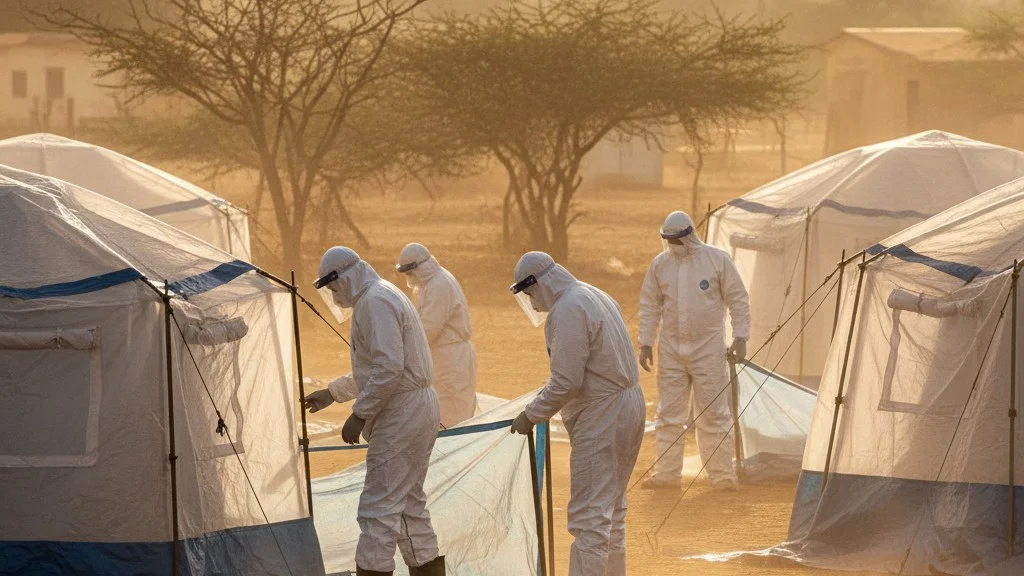
The WHO has already begun airlifting metric tonnes of medical emergency supplies from Kinshasa to Bunia. Priority field actions include establishing specialized isolation tents, implementing strict infection prevention controls in local clinics, expanding rapid laboratory testing capacities, and organizing safe, dignified burials to prevent community amplification of the virus.