News
Post Title: Strait of Hormuz Conflict Escalates: Global Oil and US 'Project Freedom' Impact
By ExFunCity · 5 May 2026
TL;DR — Naval skirmishes in the Strait of Hormuz raise oil supply fears. Learn about US 'Project Freedom' and the dynamic situation impacting global markets.
 Strait of Hormuz Conflict Escalates: Global Oil and US 'Project Freedom' Impact
Tensions have risen sharply in the Strait of Hormuz, a key oil chokepoint, following reports of recent naval skirmishes involving Iranian forces and Western vessels. This escalation directly challenges global energy security and has immediately impacted international oil markets, with prices fluctuating as traders assess the risk of a significant supply disruption. In response, the United States has intensified its maritime security initiative, known as Project Freedom, aimed at ensuring the unhindered flow of commerce through the vital waterway. The situation remains fluid, with international partners closely monitoring developments and calling for de-escalation.
Reports of Naval Skirmishes Raise Alarms
Recent days have seen a series of incidents in the waters of the Strait of Hormuz. Specific reports, though sometimes conflicting in their details, indicate encounters between Iranian Revolutionary Guard Corps (IRGC) Navy vessels and commercial or coalition warships. These interactions, described by some sources as "unsafe and unprofessional," include close approaches and, in at least one instance, claims of warning shots being fired. While large-scale conflict has been avoided, the frequency and nature of these skirmishes have raised serious alarms about the potential for miscalculation leading to a wider confrontation. The [international community] -> (Link to: Summary of global diplomatic reactions and calls for calm in the Middle East) is urging all parties to exercise maximum restraint to prevent further escalation that could jeopardize regional stability.
US Intensifies 'Project Freedom' to Protect Shipping
The United States has responded to the heightened threat environment by reinforcing its commitment to "Project Freedom." This operation, a coalition effort led by the US Naval Forces Central Command, involves enhanced maritime patrols, increased surveillance, and a more visible naval presence in and around the Strait of Hormuz. The primary objective is to deter aggression and reassure commercial shipping companies of safe passage. US officials have emphasized that [freedom of navigation] -> (Link to: Analysis of international maritime law and its application in strategic waterways) is a non-negotiable principle and that any attempts to disrupt or harass lawful commerce will be met with appropriate defensive measures. The increased deployment of US assets underscores the seriousness with which Washington views the situation and its potential impact on global interests.
Collaborative Maritime Security Efforts
"Project Freedom" is not a unilateral US effort; it relies on collaboration with regional and international partners. Several nations have contributed naval vessels, personnel, and intelligence capabilities to the coalition. This collective approach aims to distribute the burden of maintaining maritime security and present a unified front against potential threats. Key participating countries often include traditional allies and regional partners who share a vested interest in the stability of the Persian Gulf and the uninterrupted flow of oil and gas. The effectiveness of this coalition relies on seamless communication and coordinated operations to effectively patrol the vast and complex maritime environment.
 Global Oil Markets React to Potential Disruption
The Strait of Hormuz is the world's most important oil transit chokepoint, with an estimated 20-30% of total globally traded oil passing through its narrow waters daily. Consequently, any perceived threat to shipping in the region sends immediate shockwaves through global [energy markets] -> (Link to: Explainer on the critical role of the Strait of Hormuz in global oil supply). Oil prices often spike on news of conflict or potential disruptions, reflecting fears of reduced supply and increased insurance costs for vessels operating in the area. Market analysts are closely watching the situation, assessing the likelihood of a prolonged conflict that could lead to a significant and lasting disruption. The potential consequences extend beyond oil, also impacting liquefied natural gas (LNG) shipments, further compounding global energy security concerns.
Economic Implications for Asia and Beyond
Asian economies, particularly major consumers like China, Japan, South Korea, and India, are highly dependent on oil imports transiting the Strait of Hormuz. Any significant disruption would have severe economic consequences for these nations, potentially leading to energy shortages, increased production costs, and overall economic slowdown. The ripple effects would be felt globally, contributing to inflationary pressures and impacting consumer confidence. Governments worldwide are preparing [contingency plans] -> (Link to: Overview of strategic petroleum reserves and energy diversification efforts in major economies), including tapping into strategic petroleum reserves and exploring alternative energy sources or trade routes, although completely bypassing the Strait is currently not feasible for the volume of energy required.
Key Factors and Takeaways on the Hormuz Standoff
The ongoing [Strait of Hormuz conflict] -> (Link to: Chronology of historical tensions and conflicts involving the Strait of Hormuz) is a complex geopolitical issue with far-reaching implications. Here are key points to consider:
- Vital Chokepoint: The Strait's strategic location makes it a critical bottleneck for global energy supplies.
- Persistent Tensions: Historical and current political disagreements contribute to a state of recurring friction in the region.
- Naval Presence: Both regional powers and international coalitions maintain significant naval forces, increasing the risk of encounters.
- Market Vulnerability: Global oil prices are extremely sensitive to developments in the Strait, impacting economies worldwide.
- Diplomacy vs. Deterrence: The situation requires a delicate balance between defensive measures and diplomatic efforts to ensure long-term stability.
International Calls for De-escalation Continue
Despite the intensification of security measures like "Project Freedom," the international community continues to emphasize that a military solution is not sustainable. There are ongoing diplomatic efforts aimed at reducing tensions and finding a peaceful resolution to the underlying issues contributing to the conflict. Organizations like the [United Nations] -> (Link to: Summary of UN security council resolutions and statements on maritime security in the Gulf) and various regional bodies are actively involved in calling for dialogue and urging all parties to adhere to international law and norms regarding maritime behavior. The goal is to establish a framework for long-term stability that guarantees the safe and unhindered passage of vessels through the Strait of Hormuz, benefiting all nations dependent on the free flow of global commerce.
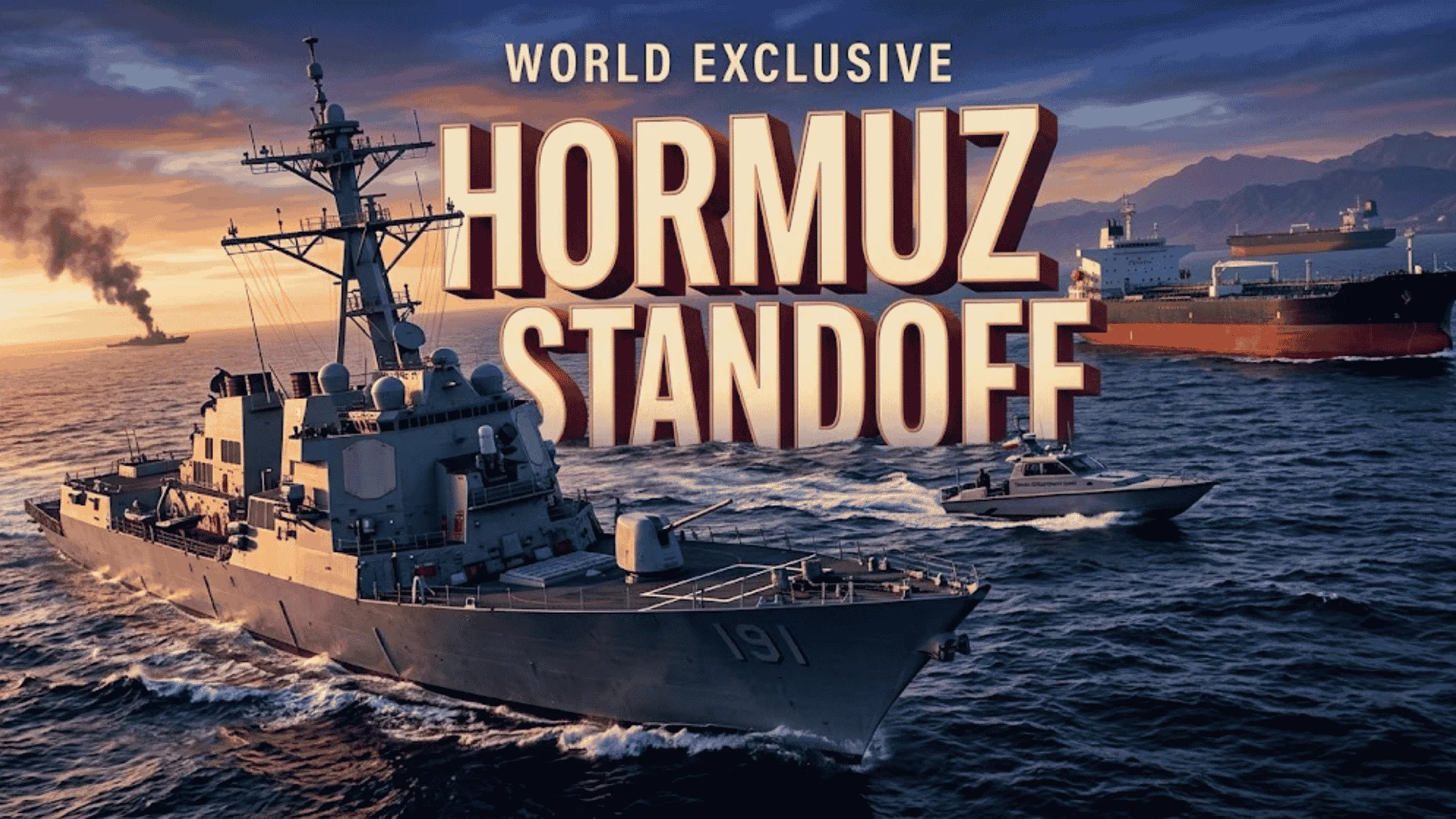
- Hero Image (image_0.png): Tense editorial news cover image depicting a US Navy destroyer patrolling a choppy Strait of Hormuz at dawn, with a stylized 'HORMUZ STANDOFF' title.
- Content Image 1 (image_1.png): Photorealistic close-up of a US Navy destroyer's radar and antenna mast, symbolizing 'Project Freedom' patrols in the Persian Gulf.
- Content Image 2 (image_2.png): Dynamic photo of high-speed Iranian Revolutionary Guard Corps (IRGC) fast attack boats maneuvering in formation, illustrating potential naval skirmishes.
- Content Image 3 (image_3.png): Aerial view of multiple large crude oil tankers navigating the narrow shipping lanes of the Strait of Hormuz, emphasizing market vulnerability.
- Content Image 4 (image_4.png): Photorealistic depiction of a crowded commodities trading floor, with screens showing oil price charts reacting sharply to news from the Middle East.