News
Strict Enforcement Questioned as Malaysia Enters Second Week of Social Media Ban for Under-16s
By ExFunCity · 14 Jun 2026
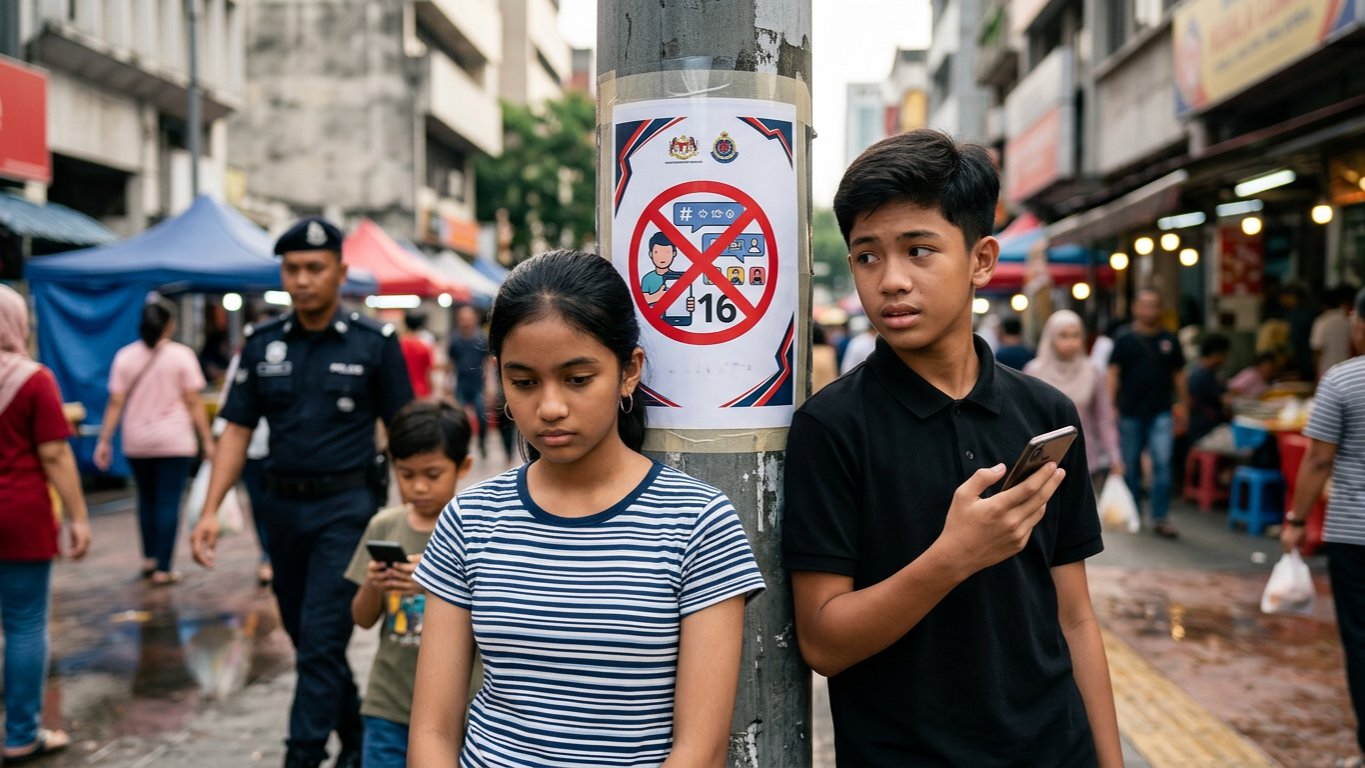
TL;DR — Learn about the under 16 social media ban Malaysia enacted on June 1, 2026. Discover the enforcement challenges, e-KYC hurdles, and platform compliance.
 Strict Enforcement Questioned as Malaysia Enters Second Week of Social Media Ban for Under-16s
As the nation enters the second week of the highly debated under 16 social media ban Malaysia, public scrutiny is intensifying over how effectively the law is being enforced. Introduced under the Online Safety Act 2025 and the accompanying Child Protection Code, the mandate officially took effect on June 1, 2026. The regulation expressly prohibits children below the age of 16 from registering new accounts on major platforms, prompting both support and criticism from various segments of society.
While the Malaysian Communications and Multimedia Commission (MCMC) aims to create a safer digital space and combat online harms such as cyberbullying, the execution of the mandate has proven challenging.
Overview of the Child Protection Code
The new framework targets licensed social media service providers with at least eight million registered users in Malaysia, which includes tech giants such as Facebook, Instagram, TikTok, and YouTube. Under the code, these platforms are legally obligated to implement robust age verification systems.
Key platform obligations include:
- Halting all new account registrations for users under 16.
- Switching on the highest privacy settings by default for young users.
- Restricting direct communication between minors and unrelated adults.
- Providing accessible parental control tools to monitor screen time.
Platforms failing to comply face hefty penalties, including fines of up to RM10 million or potential license suspension.
Enforcement Challenges and Verification Hurdles
The primary hurdle facing the under 16 social media ban Malaysia is the implementation of electronic Know Your Customer (e-KYC) verification. The government expects platforms to verify user age using official documents like the MyKad or MyDigital ID. However, cybersecurity experts question whether foreign tech companies can securely process Malaysian identification documents without risking data breaches.
Furthermore, a technical gap remains. Young users are reportedly bypassing age gates using Virtual Private Networks (VPNs) or their parents' credentials. The MCMC has warned that sign-up screens alone are insufficient, demanding platforms continuously audit for circumvention and remove underage accounts.
Concerns from Parents and Rights Groups
While many parents welcome the ban as a necessary step to protect adolescent mental health, the technical transition remains confusing. MCMC Guidelines on Online Safety suggest a grace period for verifying existing users, but clear communication on how this affects current teenage accounts is lacking. Digital rights groups also caution against excessive surveillance, stressing that age verification must not lead to the logging of what citizens read or post online.
 Key Facts
- The under-16 social media ban officially commenced on June 1, 2026.
- The rule applies to platforms with over eight million Malaysian users.
- Platforms face penalties of up to RM10 million for failing to enforce age verification.
- The regulation focuses on new registrations, with a rolling verification process planned for existing accounts.
What People Are Asking
Can my child use YouTube under the new Malaysian social media law?
Yes, children are not banned from the internet or watching content. The restriction applies to creating an individual social media profile. Children can still access age-appropriate content, often supervised through linked parental accounts.
How does Malaysia enforce the under-16 social media ban?
Enforcement relies on mandatory age verification during account sign-up. Platforms are required to verify age using government records like MyKad or MyDigital ID. The MCMC monitors compliance and issues penalties for systemic failures.
Will parents be punished if a child bypasses the ban?
No. The Communications Ministry has clarified that the regulatory burden falls entirely on the social media platforms to maintain strict security, not on the parents.