News
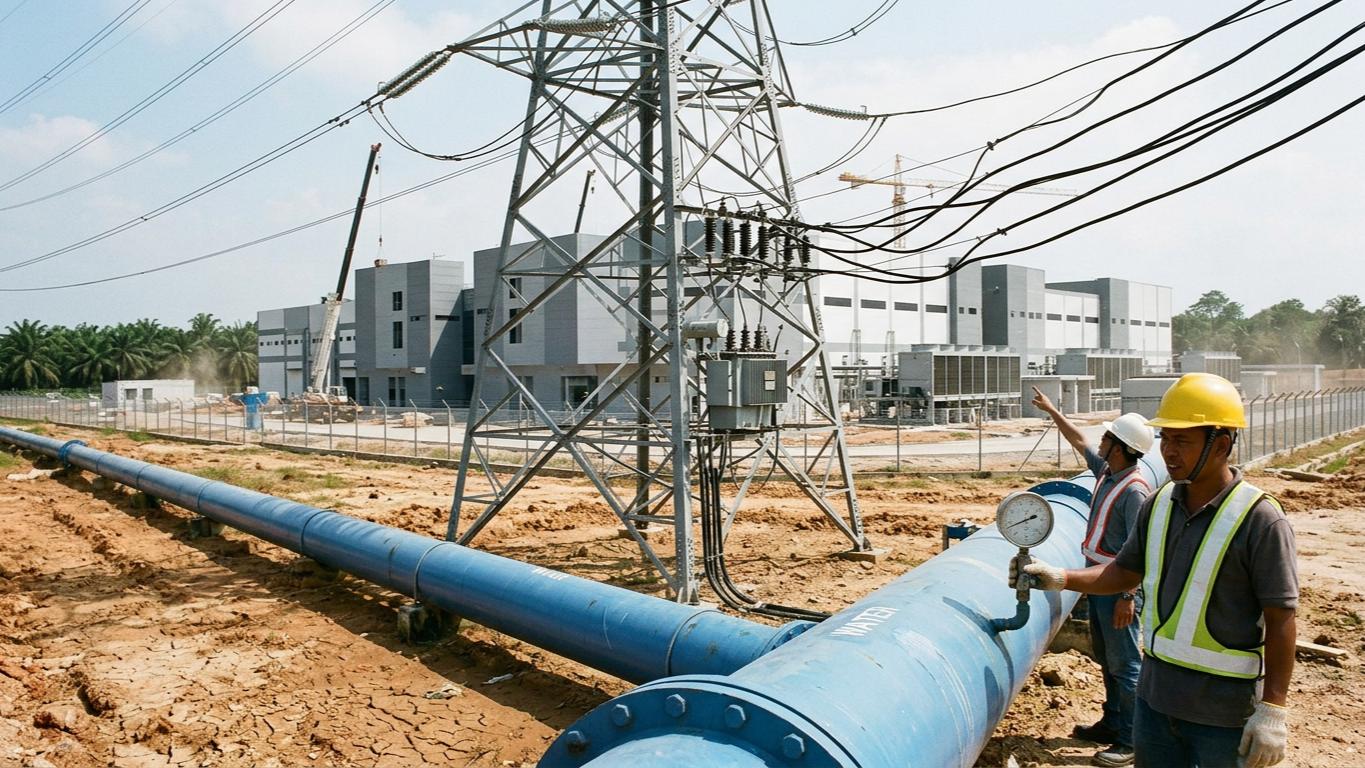
S&P Global Warns Power and Water Bottlenecks Threaten Malaysia’s Tripling Data Center Boom
By ExFunCity News Desk · 20 Jul 2026

TL;DR — S&P Global Ratings reveals Malaysia's data center capacity will triple by 2030, but warns power and water bottlenecks could derail infrastructure progress.
 S&P Global Warns Power and Water Bottlenecks Threaten Malaysia’s Tripling Data Center Boom
The rapid expansion of Malaysia's digital infrastructure has reached a critical inflection point. A newly released report by S&P Global Ratings titled “Malaysia's Data Center Outlook: A Reset For Sustainable Growth” highlights that while the country is on track to achieve massive Malaysia data center hub growth, severe utility constraints could form a major development bottleneck.
The ratings agency expects Malaysia to successfully navigate these near-term execution risks, eventually tripling its data center capacity by the year 2030. However, the sheer scale of the expansion is testing the limits of the local grid and water supply, shifting the nationwide operational strategy from uninhibited expansion to a calculated reset aimed at long-term sustainability.
Massive Expansion Triggers Strict Utility Resource Reset
According to S&P Global Ratings credit analyst Spencer Ng, Malaysia is intentionally adjusting its regulatory framework to secure sustainable asset growth. The influx of high-density artificial intelligence (AI) workloads requires immense resources, which has forced domestic authorities to tighten up the development pipeline.
Projections show that data centers could consume nearly 31% of the total electricity demand in Malaysia by 2035, climbing sharply from roughly 7% today. To cope with this demand, national infrastructure plans require scaling up power capacity by 50% between 2026 and 2035. However, any unexpected delays in constructing these power grids or implementing adequate water supply rollouts will directly restrict regional growth targets.
State Authorities Enforce Quality Control Measures
Local state governments are actively stepping in to manage resource depletion. In Johor, authorities have officially halted new development approvals for Tier 1 and Tier 2 facilities that lack modern resource efficiency.
- These outdated, lower-tier systems consume up to 200 times the water volume required by highly optimized Tier 3 and Tier 4 setups.
- New structural compliance codes require operators to declare their exact annual power usage to help regulators align supply with actual demand.
- Financial shortfalls of RM 8.50 per kilowatt per month will be levied against operators who fail to meet 85% of their declared power utilization during their first four years of site operations.
 The USD 20 Billion Digital Infrastructure Funding Gap
Building out the physical shells and sourcing heavy-duty technical cooling equipment for the projected two gigawatts (GW) of capacity addition will require massive investments. S&P Global estimates that the sector needs over USD 20 billion (approximately RM 81.8 billion) in funding over the next three consecutive years alone.
This figure excludes the actual processing hardware; adding specialized AI chips can increase the final layout costs by one to four times the value of the physical building shell. Analysts warn that this funding threshold will likely exceed the sector concentration limits of domestic Malaysian banks, which are estimated to top out at an aggregate of USD 30 billion. Consequently, international project financing and private credit providers will need to step in to bridge the investment gap.
Key Facts
- Capacity Projections: Malaysia's data center market capacity is forecast to nearly triple by 2030, establishing it as a primary hub in Southeast Asia.
- Energy Consumption: Digital facilities are estimated to occupy over 30% of the country's total power grid demand by the year 2035.
- Funding Requirements: The sector requires USD 20 billion over the next three years for facility shells and infrastructure equipment alone.
- Regulatory Penalties: Data center operators face a monthly penalty of RM 8.50 per kilowatt for failing to reach 85% of their projected power utility targets.
What People Are Asking
- Question: Why is Malaysia experiencing a sudden boom in data center hub growth?
- Answer: The growth is driven by its close geographic proximity to Singapore, stable land availability, lower overall cost structures, and proactive government support for digital trade expansion.
- Question: Are Malaysian data center projects facing an oversupply risk?
- Answer: Oversupply fears have eased due to stricter state approvals and policy transitions that favor higher-tier, highly efficient AI facilities over resource-heavy legacy systems.
- Question: What alternative capital sources do data center developers need to use?
- Answer: Because the funding scale exceeds traditional domestic bank limits, developers must transition toward international private credit channels, public credit markets, and specialized project finance.