News
PM Anwar Unveils RM5 Billion MSME Rescue Package Amid Global Energy Crisis
By ExFunCity · 20 Apr 2026
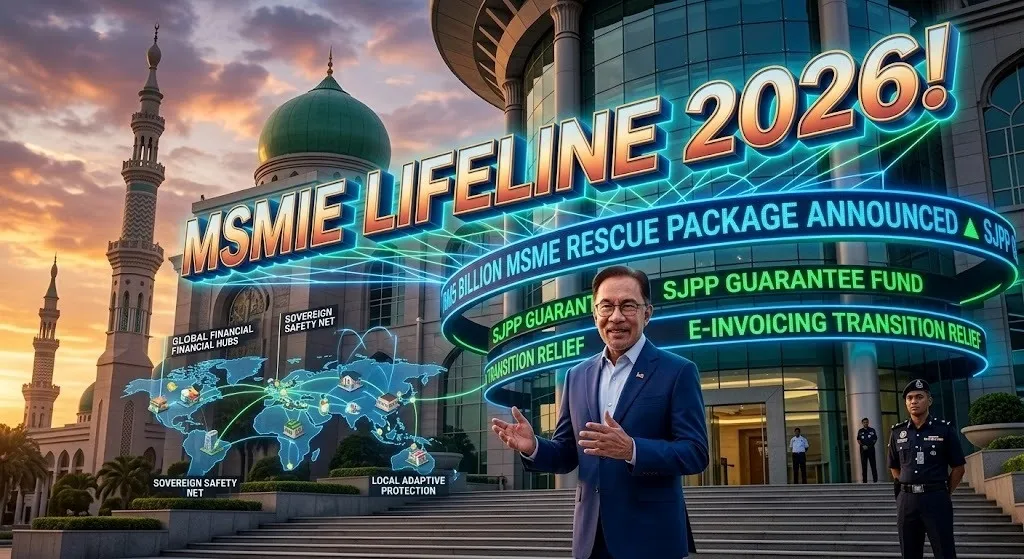
TL;DR — PM Anwar Ibrahim launches an RM5 billion SJPP guarantee and 12-month e-invoicing relief for MSMEs to combat rising costs from the West Asia blockade.
PM Anwar Unveils RM5 Billion MSME Rescue Package Amid Global Energy Crisis
As the global energy crisis continues to drive up operating costs and disrupt supply chains, Prime Minister Datuk Seri Anwar Ibrahim has moved decisively to protect Malaysia’s economic backbone. Today, April 20, 2026, the Prime Minister announced a comprehensive RM5 billion rescue package specifically designed to help Micro, Small, and Medium Enterprises (MSMEs) stay afloat. Speaking from Putrajaya, Anwar emphasized that the "Madani Government" is acting swiftly to ensure that the small businesses driving the nation's growth are not crushed by the "extraordinary external pressures" originating from the ongoing maritime blockade in West Asia.

Expanding the SJPP Guarantee Facility
A central pillar of this rescue package is the expansion of the Syarikat Jaminan Pembiayaan Perniagaan (SJPP) guarantee facility. To improve access to credit for struggling businesses, the government is increasing the financing coverage to 80% (up from 70%) and extending the guarantee tenure to 10 years.
This RM5 billion allocation is targeted at the sectors most affected by the energy spike, including:
- Logistics & Transportation: Facing high fuel costs despite national subsidy efforts.
- Agriculture & Agri-food: Struggling with increased fertilizer and machinery costs.
- Tourism: Dealing with rising travel costs and shifting global traveler sentiments.
- Construction: Impacted by the rising price of energy-intensive raw materials.
12-Month E-Invoicing Transition Relief
In a move aimed at reducing regulatory pressure, the Prime Minister also announced a 12-month transition extension for Phase 4 of e-invoicing. Small businesses with annual sales between RM1 million and RM5 million now have until December 31, 2027, to fully comply. During this period, businesses can issue consolidated e-invoices without facing penalties. "We hear the industry's concerns," Anwar stated. "Compliance should not come at the cost of a business's survival during a global crisis."
Import Duty and Tax Exemptions
To further ease the burden, the government is considering interim exemptions on import duty and sales tax for the re-importation of Malaysian-made goods. This is intended to help manufacturers whose export processes were frozen or disrupted by the West Asia conflict, ensuring they can bring their goods back into the local market without being penalized by double taxation.

Combating the "Energy Leakage"
While Putrajaya focuses on support, the Home Ministry (KDN) has simultaneously intensified enforcement to stop the illegal smuggling of subsidized resources. Home Minister Datuk Seri Saifuddin Nasution Ismail reported that RM11.05 million worth of goods—mostly diesel and petrol—were seized between April 12 and 16. The government remains firm: subsidies are for the people and local businesses, not for black-market smugglers looking to profit from global scarcity.
Economic Resilience Amid Global Headwinds
Despite the crisis, RHB Investment Bank predicts that Malaysia's trade prospects will remain stable throughout 2026. The resilience of the E&E (Electrical and Electronics) sector and the rapid shift toward green energy, such as the recently launched Solar KTM, are providing the necessary "breathing room" for the economy.
A "Sovereign" Safety Net for Local Businesses
The message from the Prime Minister today was one of "adaptive protection." By combining financial guarantees, regulatory relief, and strict enforcement against leakages, Malaysia is building a sovereign safety net. For the 1.2 million MSMEs in the country, the RM5 billion package offers more than just capital; it offers a lifeline to weather the storm until global energy lanes are reopened.