News
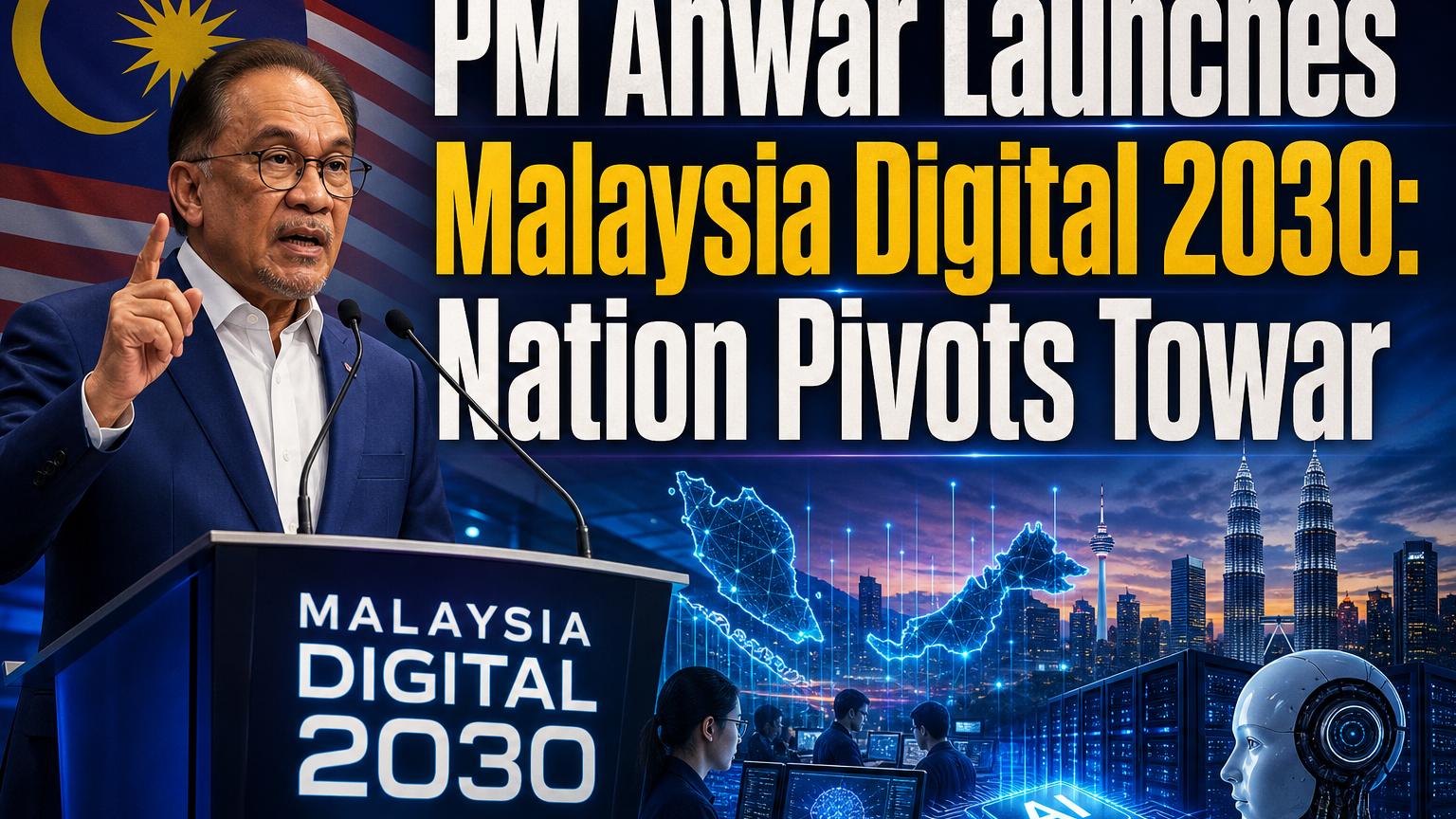
PM Anwar Launches Malaysia Digital 2030: Nation Pivots Towards AI Production
By ExFunCity · 29 Jun 2026
TL;DR — Read about the newly launched Malaysia Digital 2030 blueprint by PM Anwar Ibrahim. Discover how the nation is shifting towards AI production, high-value jobs.
 PM Anwar Launches Malaysia Digital 2030: Nation Pivots Towards AI Production
Prime Minister Datuk Seri Anwar Ibrahim has officially launched the Malaysia Digital 2030 blueprint, marking a critical turning point for the nation's technological trajectory. The comprehensive roadmap, extending from 2026 to 2030, outlines an aggressive strategy to shift Malaysia from being a consumer of foreign technology to a regional hub for artificial intelligence (AI) production and digital innovation.
Under the purview of the Digital Ministry, the blueprint is designed to future-proof the national economy and ensure competitive resilience on the global stage.
Driving the Digital Economy to New Heights
The core objective of the new framework is substantial economic expansion. The government projects that the digital economy will contribute 30% to the national gross domestic product (GDP) by the year 2030. This ambitious target relies on widespread technology adoption across public and private sectors.
By integrating AI and cloud solutions into daily operations, the initiative expects to generate RM4.5 billion in public sector savings. The blueprint also mandates that 95% of all government services be accessible online through end-to-end digital platforms, significantly streamlining public administration and cutting bureaucratic delays.
 Focus on Homegrown Technology
A major highlight of the roadmap is the push for local innovation. Rather than relying solely on imported systems, the blueprint prioritises "Made by Malaysia" digital products. This initiative is particularly focused on High Growth High Value (HGHV) sectors, aiming to build a robust ecosystem where local tech firms can develop, test, and export AI-driven solutions.
To support this ecosystem, the government is directing ministries and agencies to enhance regulatory frameworks and funding for research establishments.
Strengthening the Infrastructure
To sustain high-level AI production, foundational infrastructure is receiving major attention. The roadmap details plans to ensure nationwide high-quality internet connectivity and expedite the construction of next-generation data centres and smart cities. Digital Ministry Initiatives will be crucial in overseeing these foundational upgrades.
Seven Strategic Pillars of Implementation
To ensure coordinated execution, the roadmap is divided into seven strategic pillars, each led by a designated ministry. The pillars include:
- Government (Focusing on GovTech Malaysia)
- Economy (Promoting digital innovation and trade)
- Infrastructure (Connectivity and data centres)
- Talent (Building an AI-ready workforce)
- Society (Ensuring digital inclusivity)
- Trust and Security (Data protection and cyber resilience)
- Innovation (Research and development in AI)
Key Facts
- The blueprint targets the digital economy to make up 30% of Malaysia's GDP by 2030.
- The initiative aims to create 500,000 high-value jobs in the tech and AI sectors.
- It projects RM4.5 billion in public sector savings through extensive digitalisation.
- The framework aims to bring 95% of government services online by 2030.
What People Are Asking
- What is the Malaysia Digital 2030 action plan?
- The Malaysia Digital 2030 (MD2030) action plan is a national blueprint launched by the government to drive digital transformation. It focuses on turning Malaysia into an AI-powered nation, creating tech jobs, and boosting the digital economy's contribution to the national GDP.
- How will MD2030 affect AI jobs in Malaysia?
- The initiative is expected to significantly boost the job market for technology professionals. The government has set a direct target to create 500,000 high-value jobs, which will involve heavy recruitment in AI development, machine learning, data science, and digital infrastructure management.
- Who is leading the implementation of this blueprint?
- The Digital Ministry is spearheading the overarching national strategy. However, the plan is divided into seven distinct pillars, with specific cabinet ministers and cluster heads designated to oversee their respective sectors, such as the economy and infrastructure.