News
PDRM Busts Massive 11-State E-Waste Syndicate in 'Op Hazard 3.0'
By ExFunCity · 10 Apr 2026
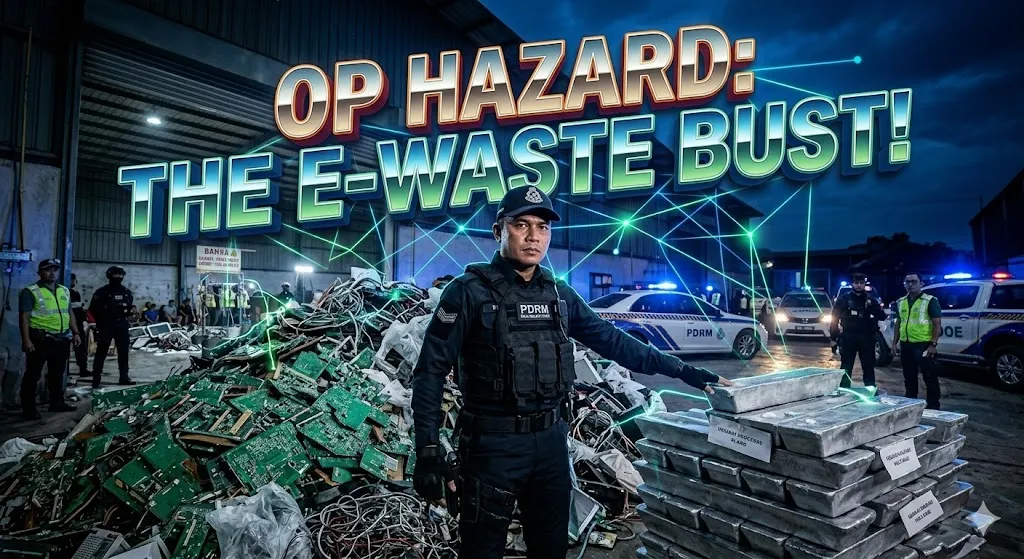
TL;DR — Malaysia's IGP confirms 515 arrests and RM582 million in seizures following a massive 11-state crackdown on illegal e-waste processing facilities.
PDRM Busts Massive 11-State E-Waste Syndicate in 'Op Hazard 3.0'
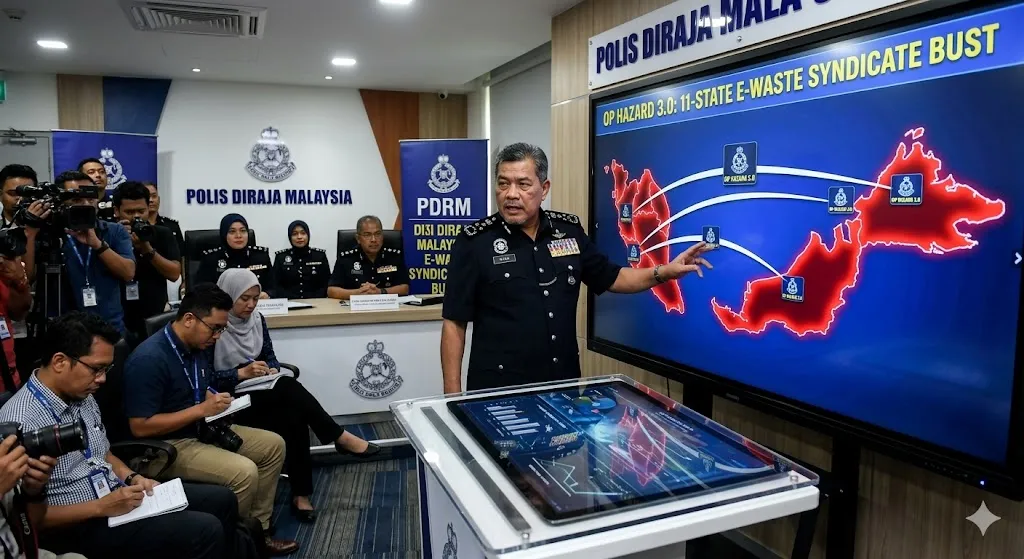
In one of the largest environmental crime crackdowns in Malaysian history, the Royal Malaysia Police (PDRM) has successfully dismantled a sophisticated illegal electronic waste (e-waste) processing syndicate. The operation, codenamed 'Op Hazard 3.0', was carried out across 11 states, leading to the discovery of hidden factories and a multi-million ringgit network. Inspector-General of Police Datuk Seri Mohd Khalid Ismail confirmed today that the operation has dealt a massive blow to syndicates that have been using Malaysia as an illegal dumping ground for global electronic trash. This integrated effort highlights Malaysia's commitment to stopping environmental pollution and protecting the health of its citizens.
Record-Breaking Seizures and Hundreds Arrested
The scale of Op Hazard 3.0 is unprecedented. During a press conference at Bukit Aman, the IGP revealed that the total value of seizures and confiscated assets has reached a staggering RM582 million. This includes thousands of tonnes of raw e-waste, processed metal ingots, and heavy machinery used for extraction. Authorities also targeted the financial roots of the syndicate, freezing seven bank accounts under the Anti-Money Laundering Act (AMLA).
Key statistics from the nationwide operation include:
- Total Arrests: 515 individuals detained, including 39 locals and 476 foreigners.
- Raided Locations: 110 premises inspected across 11 states.
- Illegal Factories: 42 facilities found operating without any environmental permits.
- Total Seizure Value: RM582 million in materials and physical assets.
- Compounds Issued: 74 fines totaling RM110,700 for various municipal violations.
The Dark Side of Illegal E-Waste Processing
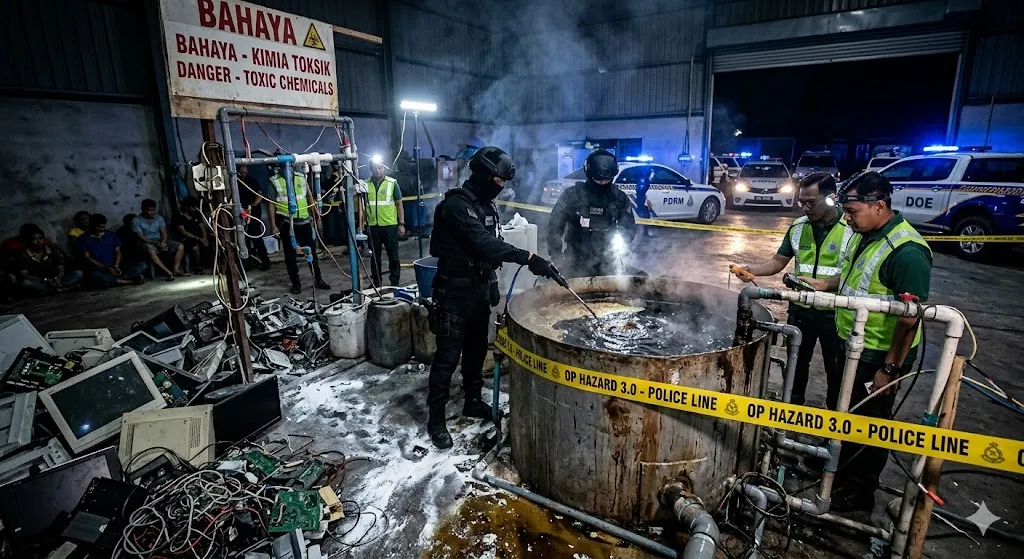
The syndicate’s modus operandi involved importing discarded electronic components—such as old circuit boards, batteries, and wires—from overseas under false declarations. These items were then sent to unlicensed factories in rural or industrial areas, particularly in the Klang Valley, Negeri Sembilan, and Johor. Inside these facilities, workers used dangerous chemicals and open-burning methods to extract valuable metals like gold, copper, and aluminium.
These illegal methods pose a severe risk to the environment. The toxic runoff from these factories often enters local water sources, while the smoke from burning plastic and lead-heavy components pollutes the air. Authorities believe the final metal products were being prepared for export to third countries to be sold at high market prices. By bypassing environmental laws, these syndicates were making massive profits while leaving Malaysia to deal with the toxic leftovers.
Human Exploitation in Illicit Facilities
Investigations also uncovered a disturbing pattern of labour exploitation. Among the 515 arrested, over 100 were undocumented migrants. These workers were often forced to work in hazardous conditions without any protective gear, receiving very low wages. The IGP noted that the syndicate preferred hiring undocumented workers to avoid detection and keep costs low, further highlighting the criminal nature of these operations.
Multi-Agency Cooperation for a Greener Malaysia
The success of Op Hazard 3.0 was made possible through the collaboration of several high-level agencies. A total of 2,147 personnel were deployed, including the Police General Operations Force (GOF), the Department of Environment (DOE), and the Inland Revenue Board (IRB). The IRB is currently investigating 24 companies linked to the raids for suspected tax evasion, ensuring that every legal angle is covered.
This "whole-of-government" approach is essential because environmental crimes are often linked to other illegal activities like money laundering and tax fraud. By working together, these agencies can trace the money trail back to the masterminds who organize these networks from behind the scenes. The IGP warned that the police are now focused on tracking down the high-level owners of these illegal premises who have managed to evade capture so far.
[H3] Future Monitoring and Public Help
To prevent these factories from reopening, the government plans to increase the use of technology, including drones and satellite imaging, to monitor industrial zones. However, public assistance remains the most effective tool. Many of the raids in Op Hazard 3.0 were triggered by tips from local residents who noticed unusual smells or heavy lorry movements at odd hours. PDRM urges all Malaysians to remain vigilant and report any suspicious industrial activity to their nearest police station or via the DOE hotline.
Upholding Environmental Sovereignty
The bust of this 11-state syndicate sends a clear message to international polluters: Malaysia is not a "trash bin" for the world's electronic waste. Under the leadership of Datuk Seri Mohd Khalid Ismail, PDRM is prioritizing the protection of the country's natural resources and public health. As the global digital economy grows, the amount of e-waste will only increase. Through operations like Op Hazard 3.0, Malaysia is setting a strong precedent for environmental sovereignty and law enforcement in the region.