News
Over 200,000 Civil Servants Begin WFH Arrangements Amid Rising Costs
By ExFunCity News Desk · 15 Apr 2026

TL;DR — Effective April 15, 2026, over 200,000 Malaysian civil servants begin WFH to offset high fuel costs and heatwave risks. Learn about the eligibility criteria.
Over 200,000 Civil Servants Begin WFH Arrangements Amid Rising Costs
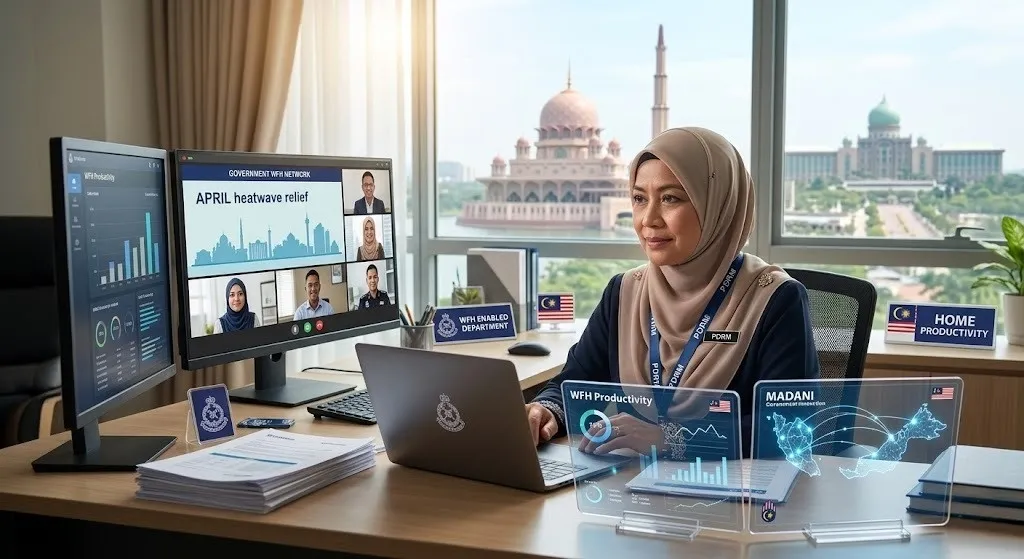
In a historic shift for the Malaysian public sector, more than 200,000 civil servants nationwide officially begin work-from-home (WFH) arrangements today, April 15, 2026. This massive rollout, announced by Chief Secretary to the Government Shamsul Azri Abu Bakar, is a strategic response to the dual challenges of rising transportation costs and the ongoing extreme heatwave. By allowing eligible staff to work remotely for up to three days a week, the government aims to reduce the financial burden on its workforce while maintaining high levels of public service delivery through digital innovation.
Strategic Response to Global Energy Volatility
The implementation of this policy follows weeks of soaring petrol and diesel prices triggered by geopolitical tensions in the Middle East. With the "Strait of Hormuz Blockade" driving global oil prices above $110 per barrel, the cost of daily commuting has become a significant strain on middle-to-low-income government employees.
Key details of the WFH policy include:
- Distance Criteria: Civil servants living more than 8km away from their office are prioritized for the arrangement.
- Flexibility: Employees are allowed to WFH for three days a week, subject to approval from their respective heads of department.
- Cost Efficiency: The move is expected to save the government millions in electricity and utility costs at administrative buildings like those in Putrajaya.
Maintaining Productivity through Innovation
Chief Secretary Shamsul Azri emphasized that WFH is "not an excuse for delay." Instead, he described it as a critical necessity for a modern, agile public service. The government has reviewed all existing programs to ensure they align with these new cost-saving measures. To support this, new digital reporting systems and AI-driven workflow monitors have been deployed to ensure that the "Madani Government's" service standards remain uninterrupted.
Shielding Workers from the April Heatwave
Beyond economic factors, the WFH mandate serves as a public health measure. Malaysia is currently experiencing a severe dry spell, with temperatures in some states like Melaka and Johor hitting 37.5°C. By keeping 200,000 people off the roads and out of peak-hour sun exposure, the Ministry of Health (KKM) hopes to see a reduction in heatstroke and exhaustion cases.
Environmental and Traffic Benefits
The reduction of over 200,000 commuters is also expected to significantly ease traffic congestion in the Klang Valley and other major cities. Environmental experts estimate a 12% drop in daily carbon emissions from government-related travel during this WFH period. This aligns with the National Energy Transition Roadmap (NETR), proving that sustainability can be achieved through behavioral changes as well as technology.
A Model for the Future of Work
Shamsul Azri noted that Malaysia is developing an "innovation model rooted in local realities." This pilot phase will be closely monitored by the Public Service Department (JPA). If successful, the WFH arrangement could become a permanent fixture for specific departments, allowing for a smaller government real estate footprint and a better work-life balance for the nation's 1.6 million civil servants.
Balancing Security and Accessibility
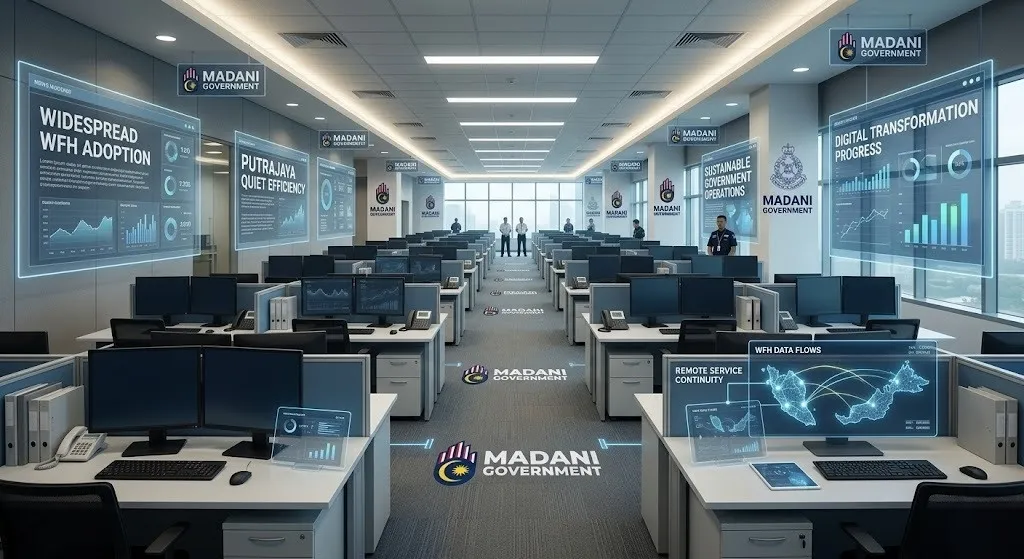
To prevent any cyber risks, all civil servants working from home are required to use secure government-issued VPNs and encrypted communication tools. While some counter services will still require physical presence, the government is pushing for a "Digital-First" approach, encouraging citizens to use the MYPDRM and MyJPJ apps for services that previously required a visit to a physical counter. As Malaysia embraces this new era of public administration, the focus remains clear: protecting the welfare of the people while evolving the efficiency of the state.