News
Malaysia’s Producer Price Index Surges 7.8% in May 2026 Driven by Oil & Gas
By ExFunCity · 29 Jun 2026
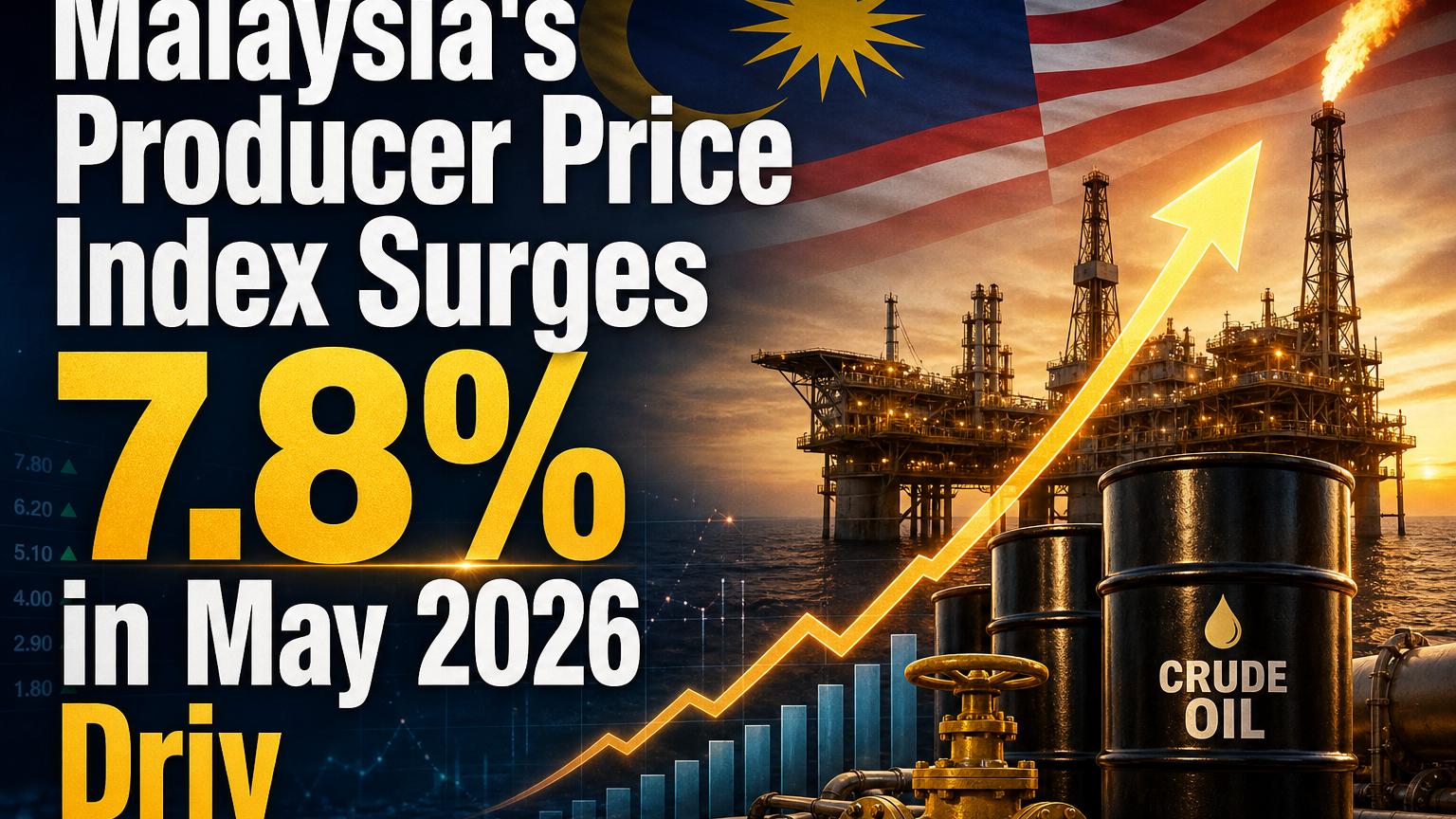
TL;DR — Malaysia's Producer Price Index (PPI) for May 2026 recorded a massive 7.8% increase, driven by a 74.5% surge in crude petroleum extraction.
 Malaysia’s Producer Price Index Surges 7.8% in May 2026 Driven by Oil & Gas
Malaysia's economic landscape is facing a new wave of cost pressures. The Malaysia Producer Price Index 2026 continued its steep upward trajectory, surging by a remarkable 7.8% year-on-year in May. This follows a 5.4% increase recorded in April, signalling a sustained build-up in the inflation pipeline that could eventually impact everyday consumers.
The Department of Statistics Malaysia (DOSM) released the latest figures, highlighting that the primary catalyst for this massive jump lies heavily in the nation's commodities sector, specifically oil and gas.
Mining Sector Sees Massive Double-Digit Growth
The mining sector remains the dominant driver of producer price inflation, recording a staggering 52.6% increase in May 2026. While slightly easing from the 53.4% rise in April, the numbers reflect intense cost pressures.
The most significant contributor within this sector is the extraction of crude petroleum index. It surged by an alarming 74.5%, heavily influencing the overall national PPI. This ongoing rise is largely attributed to global supply chain adjustments and renewed geopolitical tensions in the Middle East that have impacted global oil supplies.
 Broad-Based Gains Across Key Industries
While oil and gas grabbed the headlines, other critical sectors of the Malaysian economy also experienced noticeable price hikes.
Agriculture and Manufacturing Edge Higher
The agriculture, forestry, and fishing sector strengthened notably, rising by 8.9% in May compared to 2.7% in the previous month. This increase was heavily supported by higher costs in fishing activities, which jumped by 15.2%, and the growing of perennial crops, which rose by 11.0%.
Simultaneously, the manufacturing sector saw a 3.5% increase, stepping up from 1.1% in April. This was underpinned by higher production costs in the manufacture of coke and refined petroleum products, alongside a 5.7% rise in computer, electronic, and optical products.
Utilities Feel the Heat
Utility providers are not exempt from the rising costs. The water supply sector saw an 11.2% increase, while the electricity and gas supply sectors rose by 10.0%. These fundamental utilities affect operations across all business tiers.DOSM Official Reports provide a deeper dive into the exact breakdowns for these utility costs.
What This Means for Everyday Malaysians
The Producer Price Index measures the cost of goods at the factory gate, before they reach retail shelves. When producers face higher costs for raw materials like crude oil, agricultural produce, and utilities, they often absorb the costs temporarily. However, sustained increases, like the 7.8% jump we see in the Malaysia Producer Price Index 2026, usually result in these extra costs being passed down to the end consumer.
Business owners are already feeling the pinch of rising intermediate materials and finished goods, which rose by 3.0% and 1.7% respectively. If this trend continues, Malaysians may see higher price tags on manufactured goods, transportation, and daily essentials in the coming months.
Key Facts
- Malaysia's Producer Price Index (PPI) increased by 7.8% year-on-year in May 2026.
- The mining sector saw a 52.6% increase, primarily driven by a 74.5% surge in the extraction of crude petroleum.
- The agriculture sector rose by 8.9%, with fishing costs jumping 15.2%.
- Month-on-month, the overall local production PPI increased by 1.1%.
What People Are Asking
- Why is Malaysia's PPI rising in 2026?
- The main reason for the rise in the PPI is the massive surge in the cost of crude petroleum extraction and mining. Global factors, including geopolitical tensions and supply constraints, have caused raw material costs to skyrocket, heavily impacting the index.
- How does the 7.8% PPI increase affect consumer prices in Malaysia?
- The PPI measures costs at the producer or factory level. While it doesn't instantly mean retail prices will jump today, a sustained increase in the PPI acts as an early warning for consumer inflation. Producers facing higher costs for electricity, raw materials, and fuel will eventually pass those costs onto consumers.
- Did all sectors experience an increase in production costs?
- Yes, on a year-on-year basis, all major sectors recorded increases in May 2026. This includes mining, agriculture, manufacturing, water supply, and electricity and gas supply.