News
Malaysia Prepares for Super El Niño and Potential Haze Threats, Says NRES
By ExFunCity · 16 Aug 2026
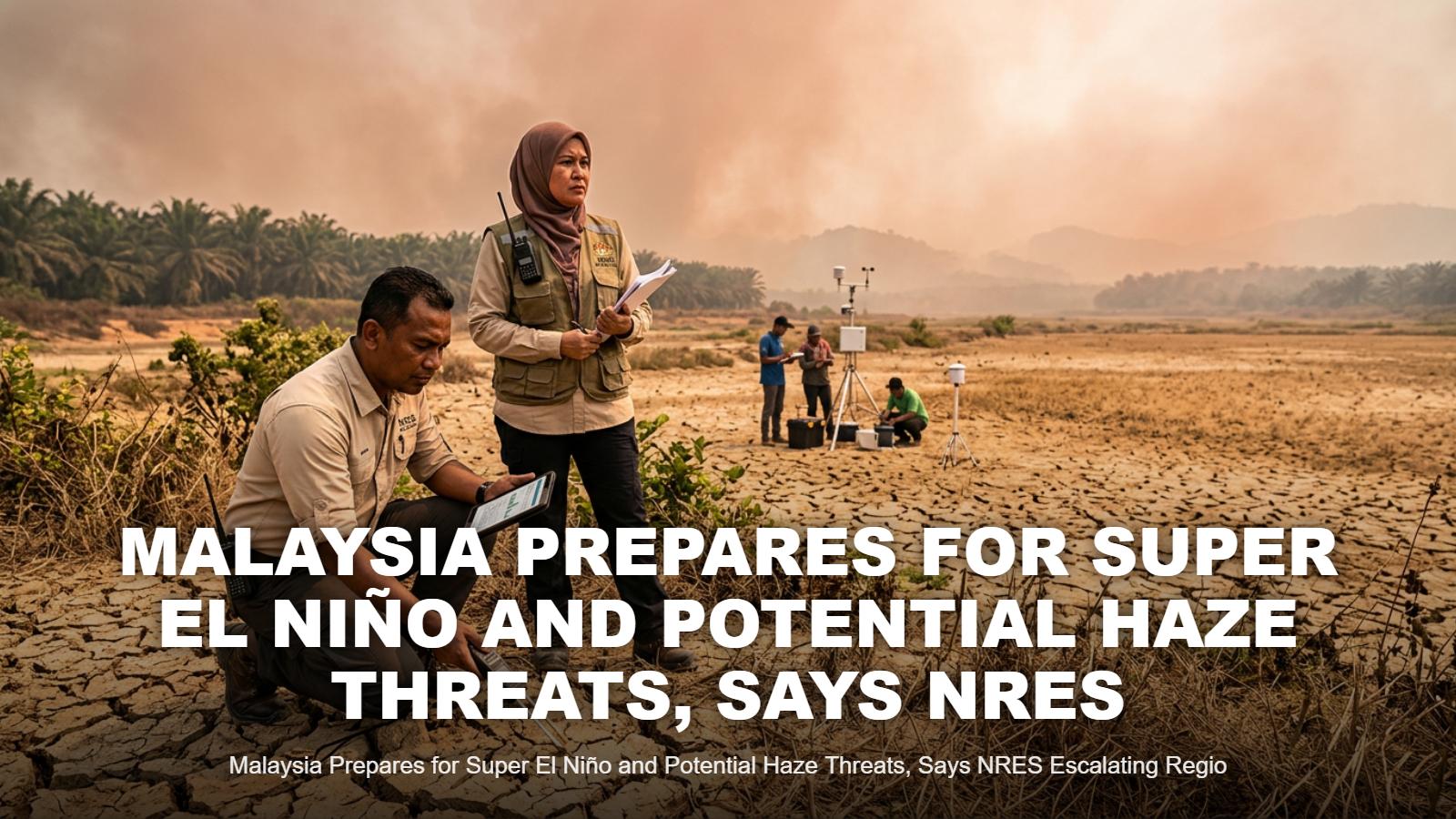
TL;DR — NRES calls for strengthened ASEAN cooperation and local readiness as intensifying El Niño conditions and the Southwest Monsoon trigger dry weather and air quality concerns.
 Malaysia Prepares for Super El Niño and Potential Haze Threats, Says NRES
Escalating Regional Weather Pressures and ASEAN Coordination
The Ministry of Natural Resources and Environmental Sustainability (NRES) has called on regional neighbours to step up proactive measures following forecasts of an intensifying El Niño phenomenon. Combined with the ongoing Southwest Monsoon, the severe weather cycle has triggered reduced rainfall, hotter atmospheric conditions, and growing risks of transboundary haze across Malaysia.
NRES Minister Datuk Seri Arthur Joseph Kurup announced that Malaysia is moving to strengthen cooperative frameworks through the ASEAN Secretariat. Because extensive peatland zones across the southern ASEAN region are vulnerable to dry spells, activating regional emergency response protocols remains vital to curbing widespread open burning and subsequent smoke pollution.
Local Air Quality and Domestic Monitoring Efforts
Domestically, the Department of Environment (DOE) and the Malaysian Meteorological Department (MetMalaysia) are maintaining round-the-clock surveillance. While air quality across most states remains moderate, select locations experiencing acute dry weather have recorded fluctuating Air Pollutant Index (API) readings.
Authorities have advised residents in affected districts to minimize strenuous outdoor activities, ensure adequate daily hydration, and utilize protective face masks when necessary. Real-time updates regarding air quality and local weather forecasts are continuously published via the official Malaysia Air Pollutant Index Management System (APIMS) portal and the mobile myCuaca application.
Protecting Public Health and Agriculture
In addition to environmental monitoring, agricultural sectors and water resource management agencies are implementing contingency plans. Officials remain vigilant against potential agricultural yield stress and localized water shortages typically associated with prolonged high-temperature phases.
 Long-Term Climate Resilience and Mitigation
Climatologists note that while Malaysia's high surrounding humidity provides a natural buffer compared to continental landmasses, strong El Niño phases can still elevate peak temperatures in northern and interior peninsular states. Government bodies continue to evaluate long-term urban adaptation strategies, integrating predictive data systems to better manage climate volatility through early 2027.
Key Facts
- Official Directive: NRES has urged southern ASEAN nations to enhance regional preparedness and daily fire reporting protocols under established haze mitigation phases.
- Primary Drivers: The combination of an intensifying El Niño cycle and the Southwest Monsoon has significantly lowered precipitation levels.
- Public Guidance: Citizens can check real-time updates via the APIMS portal or the myCuaca mobile application to monitor local air quality.
What People Are Asking
- Question 1: What is causing the recent dry weather and haze episodes in Malaysia?
- Answer: The current environmental conditions are driven by an intensifying El Niño weather phenomenon coupled with the active Southwest Monsoon, leading to reduced rainfall and higher temperatures.
- Question 2: How can members of the public check current air quality and weather conditions?
- Answer: Citizens can access official air quality data via the Malaysia Air Pollutant Index Management System (APIMS) portal or download the myCuaca app provided by MetMalaysia.