News
Malaysia Implements AI-Driven Fuel Quota System Amid Blockade Crisis
By ExFunCity News Desk · 17 Apr 2026
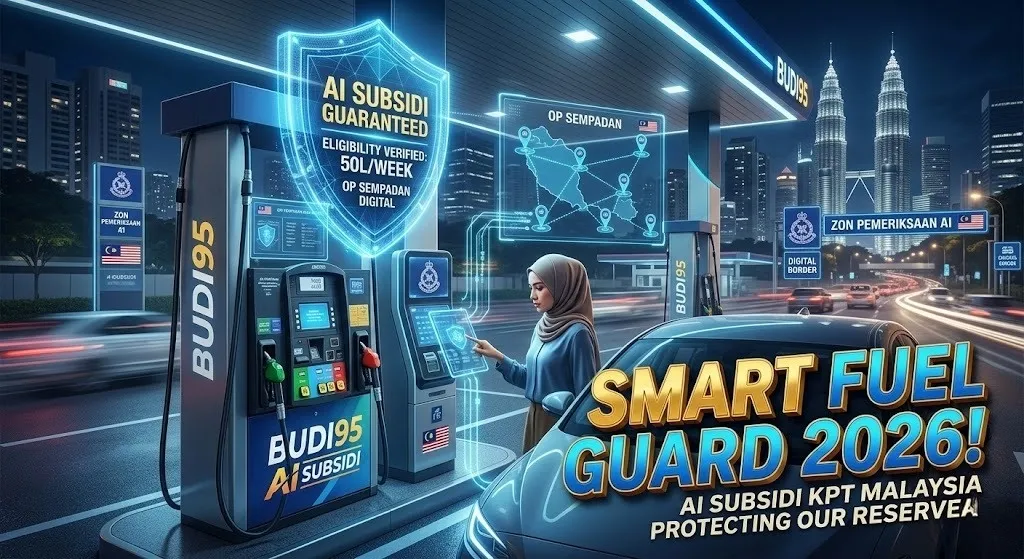
TL;DR — MOT and MOF launch a real-time AI-driven fuel quota system at BUDI95 pumps to safeguard national energy reserves during the ongoing maritime blockade.
Malaysia Implements AI-Driven Fuel Quota System Amid Blockade Crisis
In a decisive move to protect national energy security, the Malaysian government has officially activated an AI-driven fuel quota system at petrol stations nationwide today, April 17, 2026. This emergency measure, coordinated between the Ministry of Finance (MOF) and the Ministry of Transport (MOT), aims to prevent panic buying and ensure a fair distribution of RON95 fuel. The "BUDI95 Digital Guard" system uses real-time data analytics to manage consumption as the US naval blockade in the Middle East continues to choke global oil supply lines.
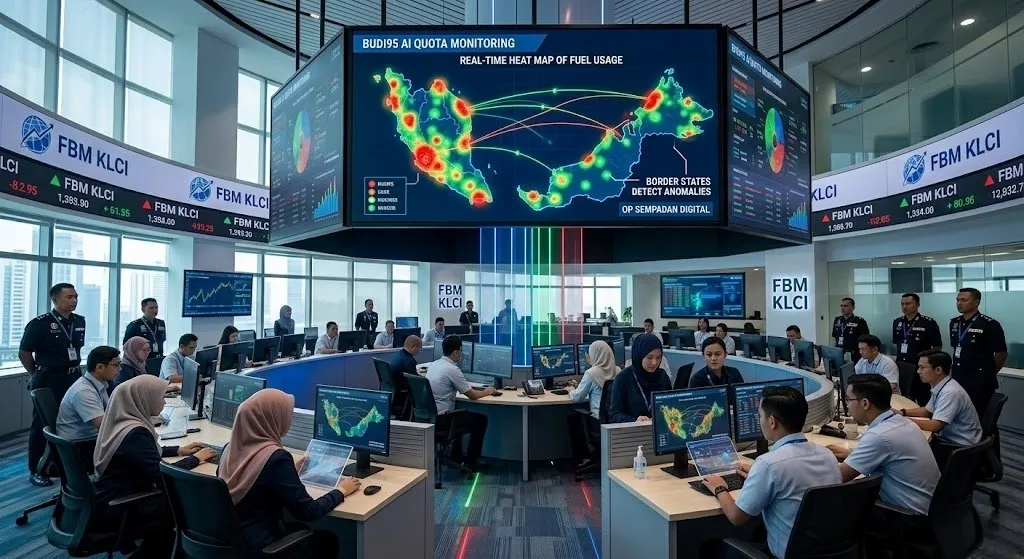
Real-Time Monitoring at BUDI95 Pumps
The new system integrates AI algorithms directly into the existing BUDI95 subsidy infrastructure. Every transaction is now cross-referenced against a national database to ensure consumers adhere to the temporary 50-litre-per-week limit for private vehicles. This is not a total rationing of fuel, but rather a "smart management" approach to keep Malaysia’s reserves at a healthy level while global prices remain volatile.
How the AI-Driven system works:
- Predictive Analysis: The AI predicts high-demand periods at specific stations and redirects supply trucks accordingly.
- Plate Recognition: Advanced cameras at pumps identify vehicles and sync with the owner's subsidy eligibility in milliseconds.
- Anti-Hoarding Detection: The system flags accounts making multiple small purchases at different stations within the same day.
- Digital Verification: Users must verify their purchase via the MySejahtera or MyJPJ app before the pump is unlocked.
Safeguarding the B40 and M40 Groups
Economy Minister Rafizi Ramli explained that the quota system is designed to be "invisible" to the average commuter who consumes less than the weekly cap. "Our priority is to ensure that essential workers, logistics providers, and the lower-to-middle-income groups are not priced out of their daily commute by speculators and hoarders," he stated. By using AI instead of manual rationing, the government avoids the long queues traditionally associated with fuel shortages.
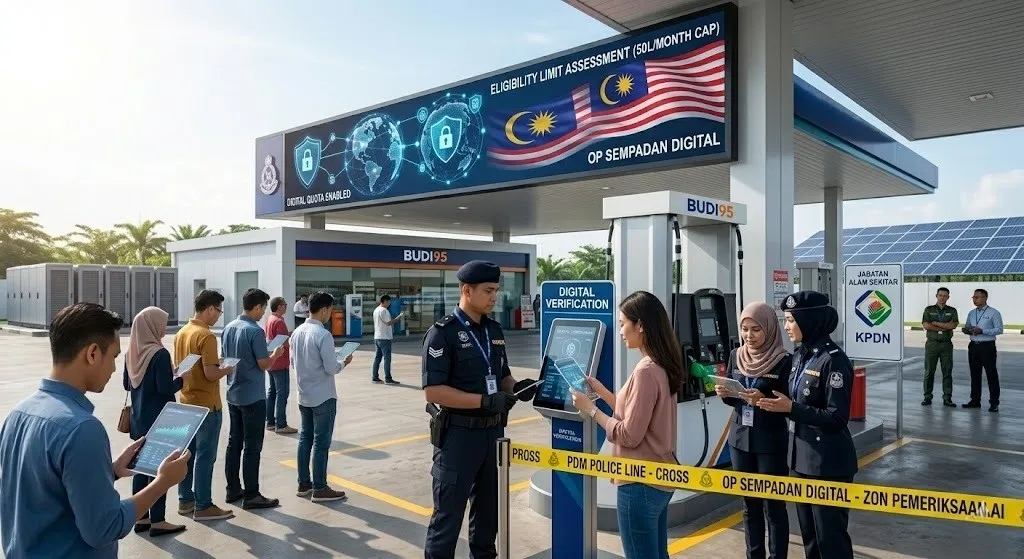
Responding to the Global Maritime Standoff
The activation of this system comes as Brent crude oil hits US$115 per barrel following the seizure of more tankers in international waters. With 20% of global oil flow halted, Malaysia is taking proactive steps to ensure its domestic economy doesn't grind to a halt. The Ministry of Domestic Trade and Cost of Living (KPDN) has also deployed "Digital Enforcement Officers" who monitor the AI dashboard for any anomalies that suggest illegal fuel smuggling near border states.
Integration with Public Transport Incentives
To offset the impact of the fuel quota, the government has simultaneously launched a "Green Transit" rebate. Citizens who reach their 50-litre limit will receive automatic 50% discounts on all LRT, MRT, and KTM services for the remainder of the week. This push toward public transport is part of a broader strategy to lower the nation's overall carbon footprint while navigating the energy crisis.
A Model for Energy Resilience
International observers are looking at Malaysia's AI-driven approach as a potential model for other ASEAN nations. By leveraging high-speed 5G connectivity and a centralized subsidy database, Malaysia has managed to implement complex rationing without the need for physical coupons or heavy-handed military intervention at stations.
Looking Ahead: Stability Through Technology
As the world waits for a diplomatic breakthrough in the Middle East, Malaysia remains focused on internal stability. The AI Fuel Quota System is expected to remain in place until global supply chains return to 90% capacity. "We are using human expertise and digital precision to weather this storm," said PM Anwar during a brief update. For the Malaysian public, the message is clear: the fuel is there, the system is fair, and the nation is prepared.