News
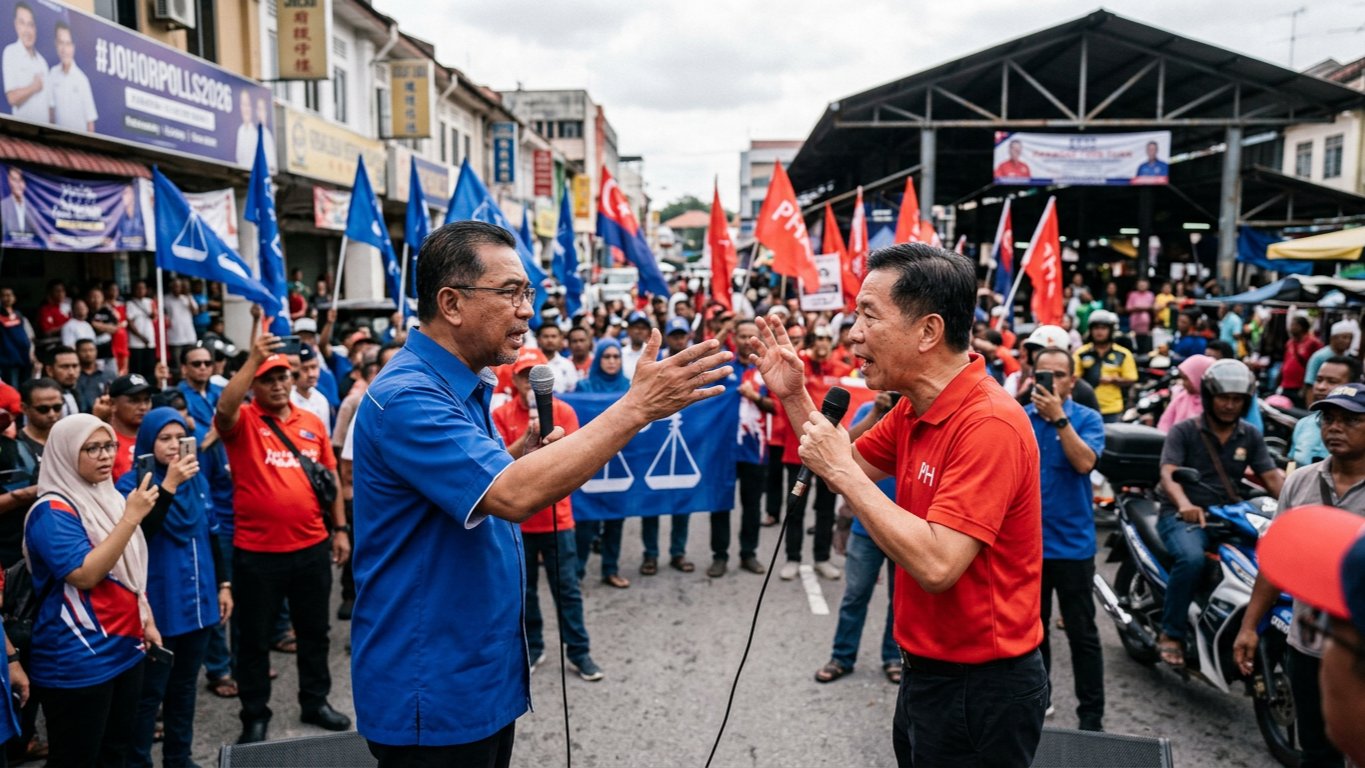
Johor Polls 2026 Heat Up: BN and Pakatan Candidates Clash Over Local Promises
By ExFunCity · 3 Jul 2026

TL;DR — The 2026 Johor state election is heating up as Barisan Nasional and Pakatan Harapan candidates clash over campaign promises ahead of the July 11 polling day.
 Johor Polls 2026 Heat Up: BN and Pakatan Candidates Clash Over Local Promises
The political temperature is rising across Malaysia's southernmost state as the Johor Polls 2026 approach their critical final week. With polling day officially set for July 11, candidates from incumbent Barisan Nasional (BN) and their federal ally Pakatan Harapan (PH) are fiercely contesting all 56 state assembly seats in a high-stakes electoral showdown.
The early dissolution of the state assembly by caretaker Menteri Besar Datuk Onn Hafiz Ghazi on June 1 set the stage for a unique clash. Despite governing together at the federal level as part of Prime Minister Anwar Ibrahim's Unity Government, BN and PH have opted to face off directly in Johor. Each coalition is actively presenting distinct local promises to a diverse electorate of 2.7 million registered voters.
A Unique Electoral Battleground
The decision by Barisan Nasional to contest solo across all constituencies represents a significant political strategy. BN is seeking to replicate its dominant 2022 performance, where the coalition secured a commanding two-thirds majority with 40 seats. Meanwhile, Pakatan Harapan is leveraging its strong urban base and federal influence to mount a formidable challenge, urging outstation voters to return home and cast their ballots.
Adding to the competitive landscape, the Perikatan Nasional (PN) coalition, despite recent internal rifts between PAS and Bersatu, is contesting 33 seats. Newcomer Parti Bersama, led by former federal minister Rafizi Ramli, and the youth-centric Malaysian United Democratic Alliance (MUDA) are also hoping to make strategic inroads, potentially splitting the vote in several tightly contested areas.
 Economic Realities and Local Pledges
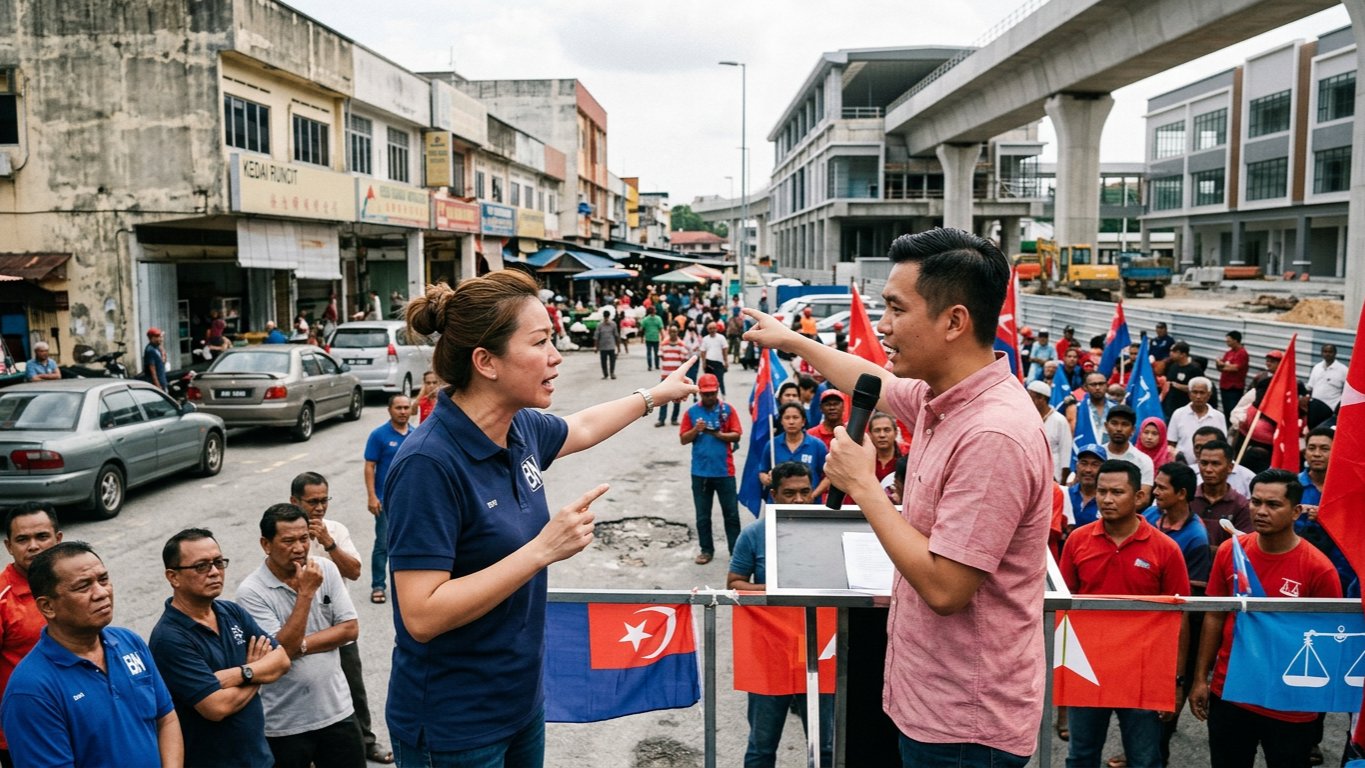
While Johor's macroeconomy remains robust—registering a stellar 6.4 percent growth and attracting RM110 billion in foreign direct investment—the campaign rhetoric on the ground tells a different story. Candidates are increasingly clashing over the disparity between state-level economic success and the daily struggles of ordinary Johoreans.
Pakatan Harapan representatives are highlighting stagnant wages, rising housing costs, and affordability pressures, particularly in the highly urbanised southern districts surrounding Johor Bahru. Conversely, Barisan Nasional candidates are pointing to upcoming mega-infrastructure projects, such as the Johor-Singapore Special Economic Zone and the impending launch of the cross-border Rapid Transit System (RTS) link, as proof of their effective governance and future job creation.
The Battle for the Mixed Electorate
The campaign has also seen a renewed focus on mixed and Chinese-majority constituencies. Issues important to local communities have surfaced in campaign debates, transforming these areas into fiercely contested zones. Both major coalitions are deploying prominent leaders to secure this crucial voting bloc, knowing that a lower overall voter turnout traditionally favours the established grassroots machinery of the incumbent government.
Key Facts
- Polling day for the Johor state election is scheduled for Saturday, July 11, 2026, with early voting on July 7.
- A total of 56 state assembly seats are being contested by 2.7 million registered voters.
- Both Barisan Nasional and Pakatan Harapan are contesting all 56 seats despite their federal alliance.
- The opposition Perikatan Nasional coalition is fielding candidates in 33 constituencies.
- To form the new state government, a coalition requires a simple majority of 29 seats.
What People Are Asking
- When is the Johor state election 2026?
- The Election Commission has set July 11, 2026, as the official polling day, following a 14-day campaign period that began on Nomination Day, June 27.
- Why did the Johor state assembly dissolve early?
- The dissolution was announced on June 1, 2026, nearly a year before the full term expired, as the incumbent government sought a fresh mandate amid shifting political dynamics.
- Who are the main coalitions contesting in the Johor Polls 2026?
- The primary battle is between Barisan Nasional (BN) and Pakatan Harapan (PH). Other notable contenders include Perikatan Nasional (PN), MUDA, and the newly formed Parti Bersama.