Travel
Indonesia Enforces Mandatory Sustainable Aviation Fuel Rules On Selected Bali And Jakarta Outbound Flights
By ExFunCity · 13 Jul 2026
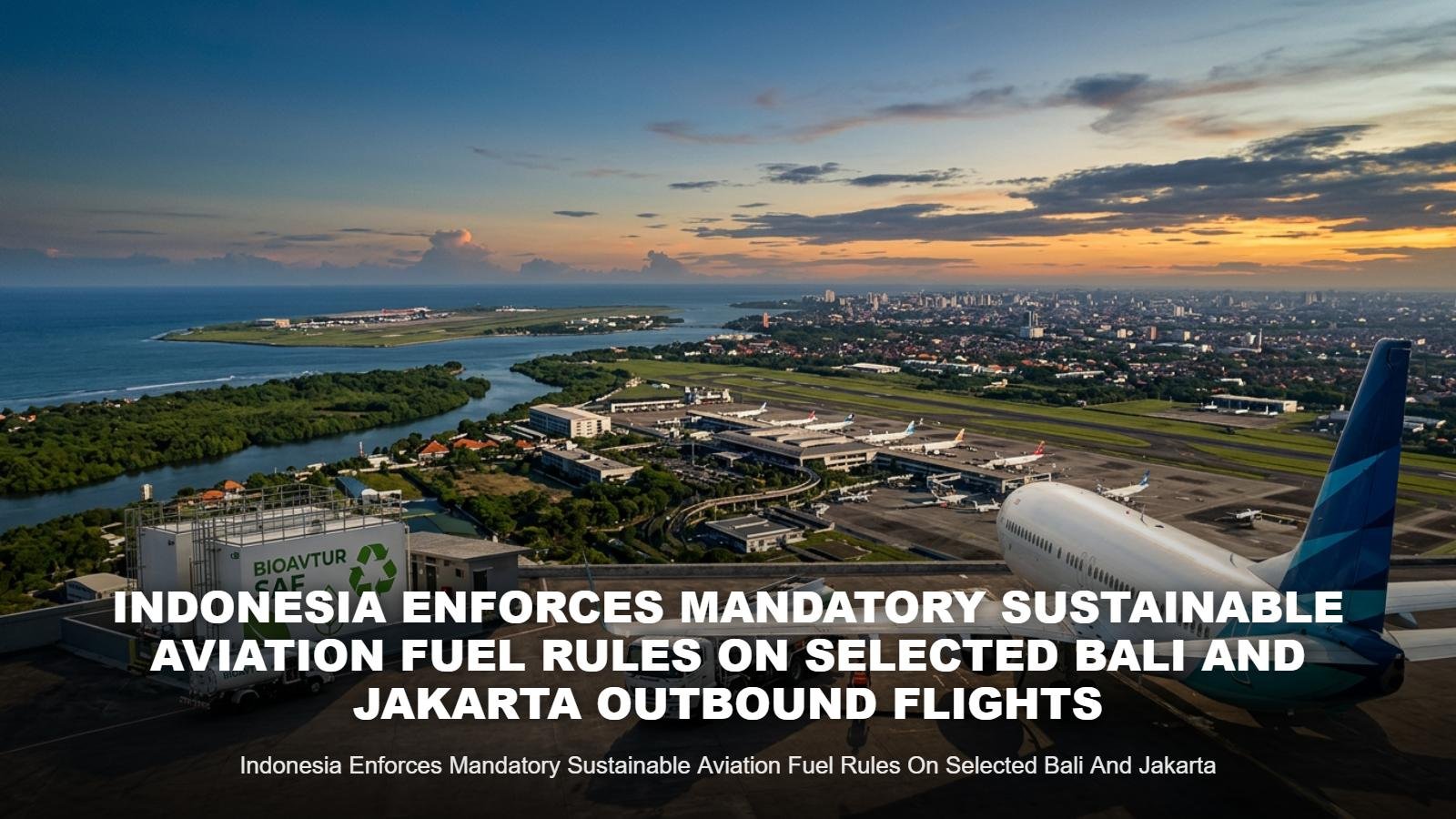
TL;DR — The Indonesian Ministry of Transportation announces a 1% bioavtur SAF blend mandate for international flights from Jakarta and Bali starting in 2027.
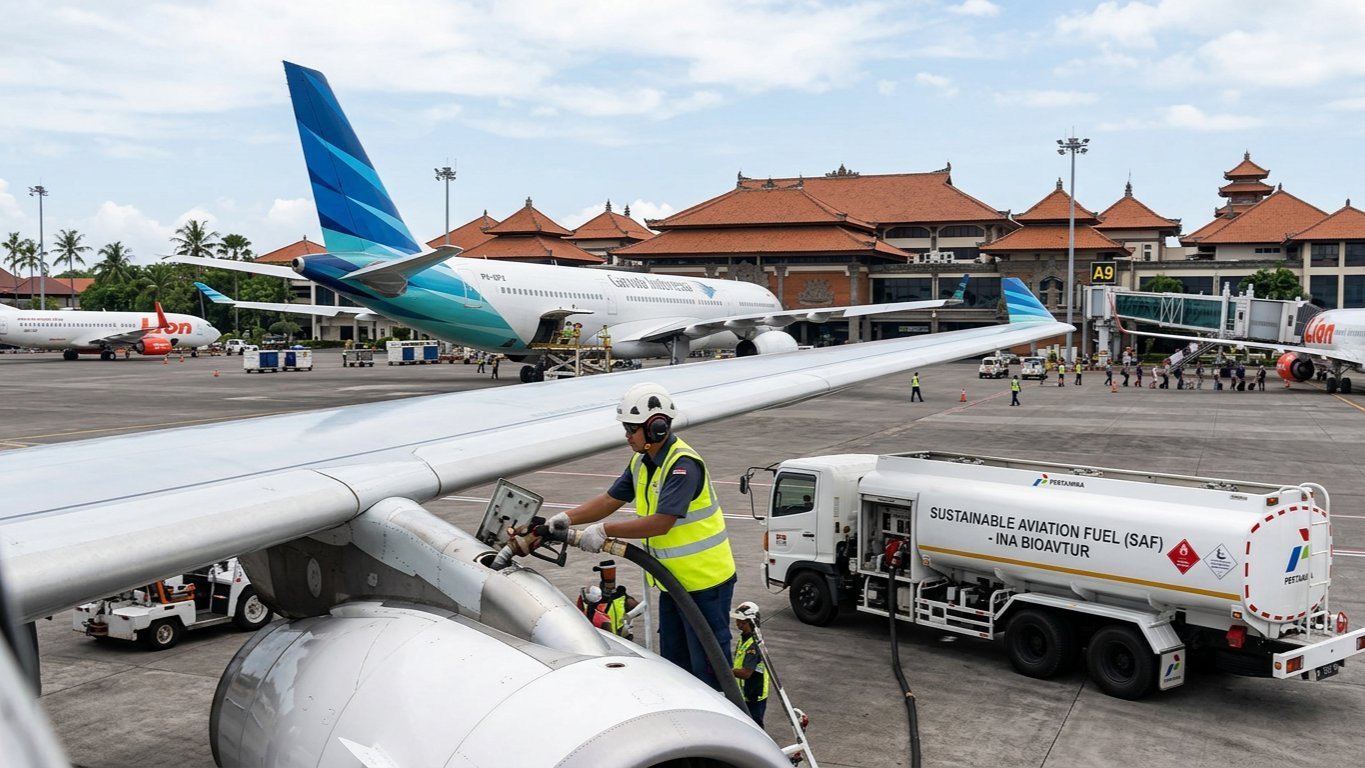 Indonesia Enforces Mandatory Sustainable Aviation Fuel Rules On Selected Bali And Jakarta Outbound Flights
New Bioavtur Mandate Targets Major Hubs For Eco-Friendly Air Travel
The Indonesian government has officially finalized plans to enforce a mandatory sustainable aviation fuel (SAF) blending program for commercial international flights. According to the Ministry of Transportation, this new eco-friendly policy will strictly target outbound international services departing from the nation's two busiest travel hubs. This phased green transition marks Indonesia's first major regulatory step toward reducing long-term greenhouse gas emissions in the regional aviation sector.
The official implementation window is scheduled to begin in 2027. Sokhib Al Rokhman, the Ministry of Transportation's Director of Airworthiness and Aircraft Operations, confirmed that the initial rollout will be highly localized to manage supply and market stability. The mandate requires a specific one percent blend of bioavtur, which is an eco-friendly jet fuel produced from renewable organic materials, mixed directly into conventional aviation fuel.
Restricted Rollout Covers Crucial Gateways in Banten and Bali
To ensure operational compliance and protect regional travel volumes, the mandate will not apply to all domestic air strips immediately. The enforcement will explicitly launch across only two major entry points to handle global passenger traffic safely.
Designated Enforcement Airports
- Soekarno-Hatta International Airport (CGK): Located in Tangerang, Banten, serving as the main industrial and corporate gateway for the capital city of Jakarta.
- I Gusti Ngurah Rai International Airport (DPS): Located in Denpasar, Bali, handling the vast majority of holidaymakers and leisure travelers visiting the resort island.
By limiting the initial mandate to these two premier airports, authorities can systematically monitor how the green fuel integrates into large-scale commercial operations without disrupting smaller domestic routes.
Successful Aircraft Trials Guarantee Consumer Safety Standards
A major concern for international holidaymakers and commercial airline operators revolves around aircraft engine safety and performance. To address these anxieties, the Ministry of Transportation highlighted extensive real-world testing phases conducted prior to the policy announcement. Comprehensive flight trials were carried out using Pelita Air’s Airbus A320 commercial aircraft on the busy Jakarta-Denpasar and Denpasar-Jakarta routes.
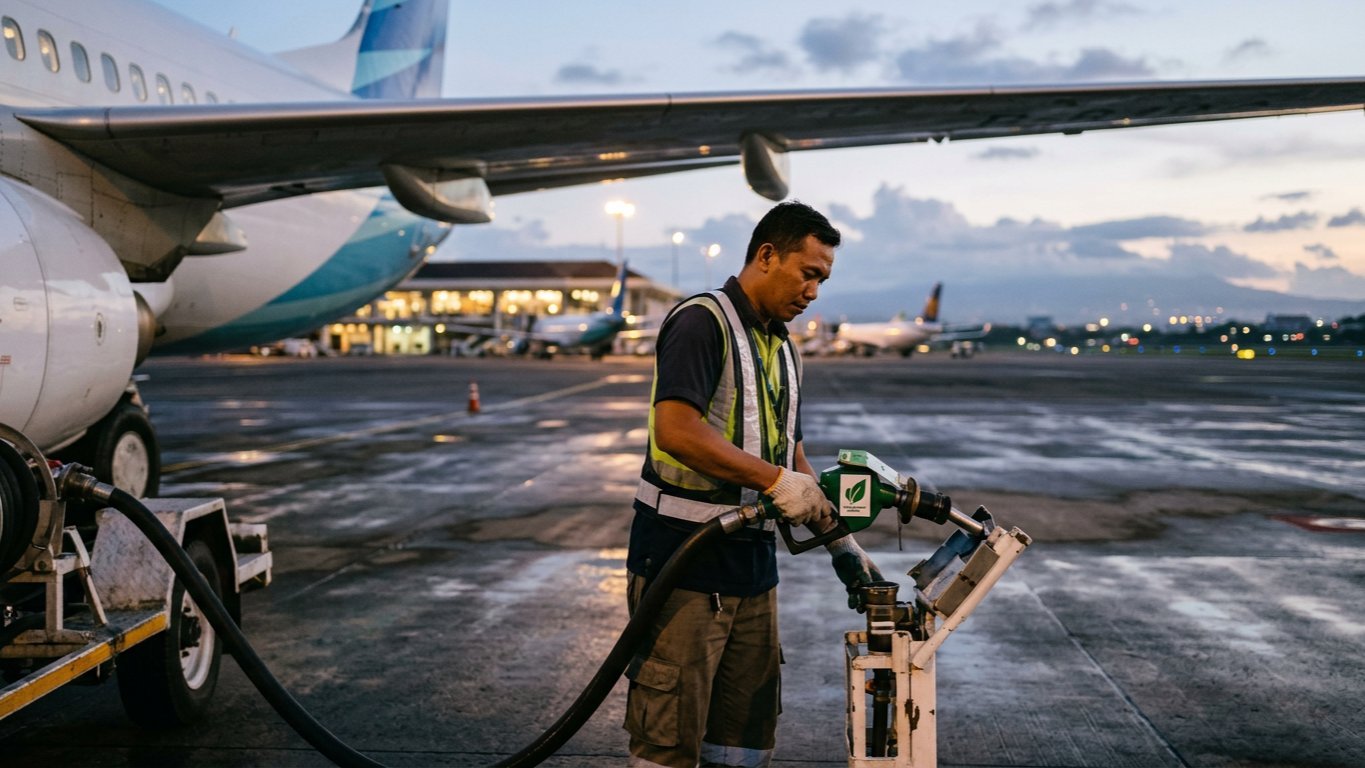
The operational test phase ran smoothly for six months, confirming that the new bioavtur blend operates flawlessly under standard commercial conditions. Technical examinations conducted at the Garuda Maintenance Facility's engine test cells verified that the one percent eco-friendly blend requires absolutely zero aircraft engine modifications. Aircraft can safely utilize the fuel mixture directly within their existing fuel tanks, maintaining standard civilian aviation safety guidelines.
 State Supply Dependencies and Long-Term Ticket Price Impacts
The overall speed and expansion of the green travel initiative remain heavily dependent on domestic fuel production capabilities. State-owned energy firm PT Pertamina is currently expanding its production facilities across several domestic refineries to secure the required volume of sustainable fuel. The government expects to require an estimated 60,000 kilolitres of sustainable fuel annually to cover the initial launch phase.
Projected Bioavtur Blending Targets (2027–2060)
Target YearMandated SAF Blending RatioEstimated Sector Impact20271.0% MandateInitial rollout for international flights20302.5% MandateBroadening to regional networks204012.5% MandateIntegration into major domestic lines205030.0% MandateHigh-volume industrial adoption206050.0% MandateUltimate Net-Zero emission target
While eco-conscious holidaymakers welcome the carbon reduction, the ministry acknowledged that bioavtur remains more expensive than standard jet fuel. Launching the mandate exclusively on international flights helps buffer local consumers from sudden domestic airfare inflation. Travelers can monitor upcoming flight options and check airline compliance notices via the Indonesia Tourism Portal before booking their journeys.
Key Facts
- Official Start Date: The mandatory one percent sustainable aviation fuel blend takes effect in 2027.
- Targeted Operations: Applies exclusively to international departures from Jakarta (Soekarno-Hatta) and Bali (I Gusti Ngurah Rai) airports.
- Production Resource: PT Pertamina will supply the domestic bioavtur utilizing refined organic feedstocks like used cooking oil.
- Long-Term Mission: The government aims to gradually increase the sustainable fuel mix ratio to 50 percent by the year 2060.
What People Are Asking
- Will the Indonesia sustainable aviation fuel rule make flight tickets more expensive?
- Because sustainable aviation fuel currently costs more to produce than standard petroleum-based jet fuel, the mandate could cause minor fare adjustments on international tickets. The government is starting with a low 1% blend to minimize the direct price impact on global passengers.
- Do aircraft engines need modifications to use Indonesia's bioavtur?
- No, the bioavtur blend functions as a "drop-in" fuel. Comprehensive six-month commercial flight trials on Airbus A320 aircraft proved that the engines operate normally without requiring any mechanical changes or retrofitted parts.