News
Global Tech Markets Bracing For Impact As Higher Western Tariffs Hit Electronics Shipments
By ExFunCity · 20 May 2026
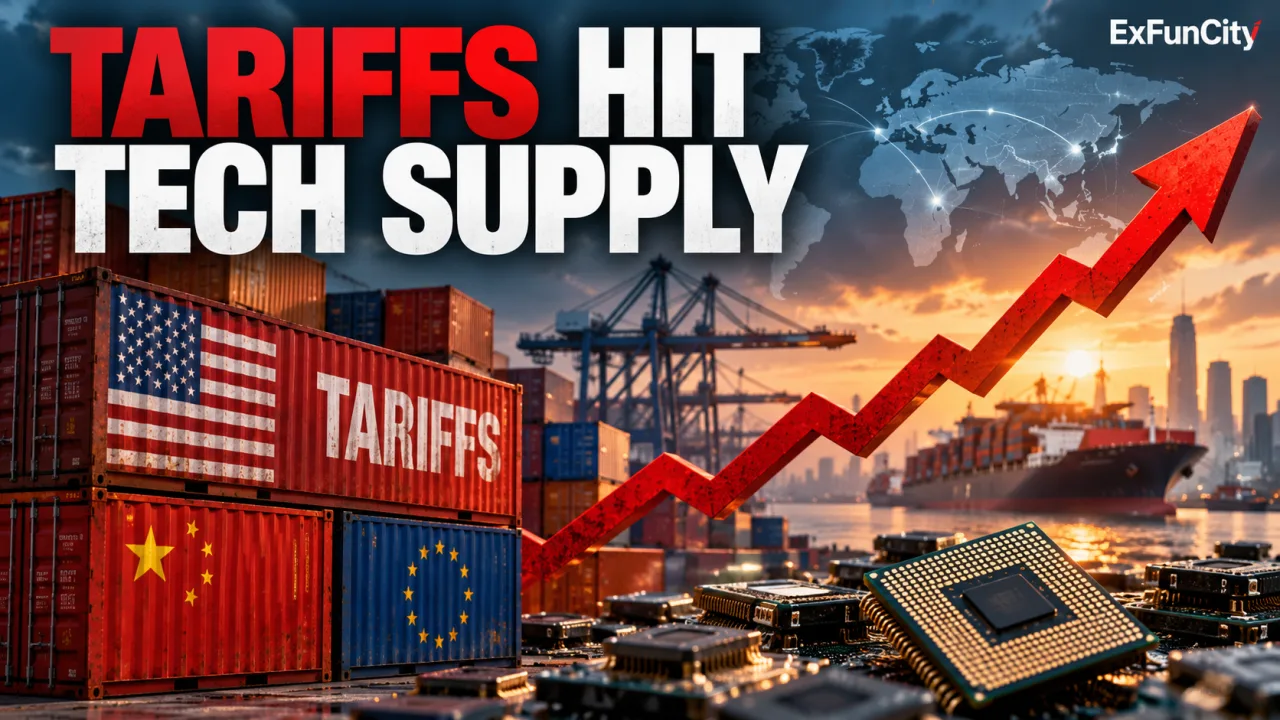
TL;DR — High-tech trade flows are facing massive disruptions this week as newly implemented Western import barriers and electronics rules trigger logistics rerouting.
 Global Tech Markets Bracing For Impact As Higher Western Tariffs Hit Electronics Shipments
Global technology markets are experiencing severe logistical friction this week as a massive wave of newly enforced Western trade barriers takes direct aim at international electronics shipments. Industry analysts report that tech manufacturers and procurement teams across major Asian manufacturing hubs are working around the clock to absorb the structural shock. The combination of sweeping regulatory updates and direct import taxes is fundamentally reconfiguring the cross-border movement of semiconductor components, consumer devices, and networking infrastructure.
The New Regulatory Barriers Straining Tech Shipments
The sudden escalation in trade friction follows a series of policy rollouts that targeted both low-value shipments and advanced technological hardware. Electronics distribution networks are struggling to navigate three massive regulatory hurdles that went into full effect over the past few weeks.
- Suspension of De Minimis Exemptions: The complete removal of tax-free thresholds for commercial e-commerce shipments has forced international air cargo networks to manually document and tax millions of low-value consumer gadgets.
- The Section 232 Full Value Rule: This newly enforced trade mechanism states that if a finished component contains any percentage of targeted metals or logic circuits, the import duty is assessed on the full value of the entire product rather than just the raw material.
- Expansion of the FCC Covered List: The inclusion of foreign-produced internet routers and networking equipment based on physical product origin rather than just brand identity has effectively frozen bulk shipments at primary ports of entry.
 Logistics Rerouting Accelerates Across Asian Tech Hubs
According to data compiled in the Thomson Reuters Global Trade Report, over 72% of international trade professionals now rank current Western tariff volatility as their primary operational risk. To mitigate immediate losses, major manufacturing networks are executing high-risk, expensive supply chain restructurings.
The immediate logistical response involves a rapid geographical shift. Component makers are steering intermediate goods—such as unpopulated circuit boards and raw microchips—away from direct western trade lanes. Instead, they are routing shipments through secondary assembly points in Southeast Asia and Latin America to obscure their direct origin.
This massive cargo diversion is creating severe local shipping bottlenecks, driving up ocean freight rates by double digits on alternative routes, and extending standard factory delivery timelines by several weeks.
Semiconductor Markets Shaken By Strict Performance Thresholds
The most intense friction is concentrated inside the advanced computing and semiconductor sectors. New enforcement protocols from Western customs border agencies have introduced explicit technical performance caps on integrated logic circuits and data transmission gear.
Under the newly active Chapter 99 provisions, importers of computing units must provide detailed technical data verifying that their products do not breach strict processing performance boundaries. This heavy compliance burden is heavily delaying customs clearance for data center infrastructure parts, slowing down local artificial intelligence development rollouts, and squeezing profit margins for electronics distributors who are forced to absorb these additional costs.
Procurement Teams Pivot To Long-Term Systemic Resilience
As these strict trade measures solidify, electronics buyers are realizing that short-term tax-dodging tactics are no longer sustainable. Global procurement strategies are shifting dramatically from simple cost optimization toward building robust systemic resilience.
Technology corporations are investing heavily in advanced sub-tier supplier mapping software to gain complete visibility into their multi-layered supply chains. Additionally, major brands are rewriting long-term component contracts to legally shift unexpected tariff liabilities onto manufacturing partners. The ultimate result is a highly fragmented global tech ecosystem, where product design choices are dictated more by regional trade regulations and compliance legalities than by engineering performance or production efficiency.