News
Fujitsu and Science Tokyo Launch Quantum Research Hub to Accelerate 2026 Tech Breakthroughs
By ExFunCity · 15 May 2026
TL;DR — Japan takes a massive leap in quantum computing. Fujitsu and Science Tokyo partner to build high-performance quantum hardware and train the next generation.
 Quantum Leap: Fujitsu and Science Tokyo Establish Hub for Next-Gen Computing Hardware
In a move that solidifies Japan’s position as a global leader in high-performance computing, Fujitsu Limited and the Institute of Science Tokyo (Science Tokyo) have officially launched the "Fujitsu Science Tokyo Quantum Computing Joint Research Cluster." Established on May 15, 2026, this hub is dedicated to bridging the gap between theoretical physics and practical, everyday technology.
The partnership aims to solve one of the biggest hurdles in modern tech: making quantum computers stable and powerful enough for commercial use. By combining Fujitsu’s industrial expertise with the academic brilliance of Science Tokyo, the hub will focus on developing advanced quantum hardware and software that could eventually outperform today’s most powerful supercomputers.
Solving the "Noise" Problem in Quantum Hardware
Current quantum computers are highly sensitive to their environment. Even the slightest change in temperature or a tiny vibration can cause "noise," leading to errors in calculations. The new research hub is specifically targeting these hardware vulnerabilities.
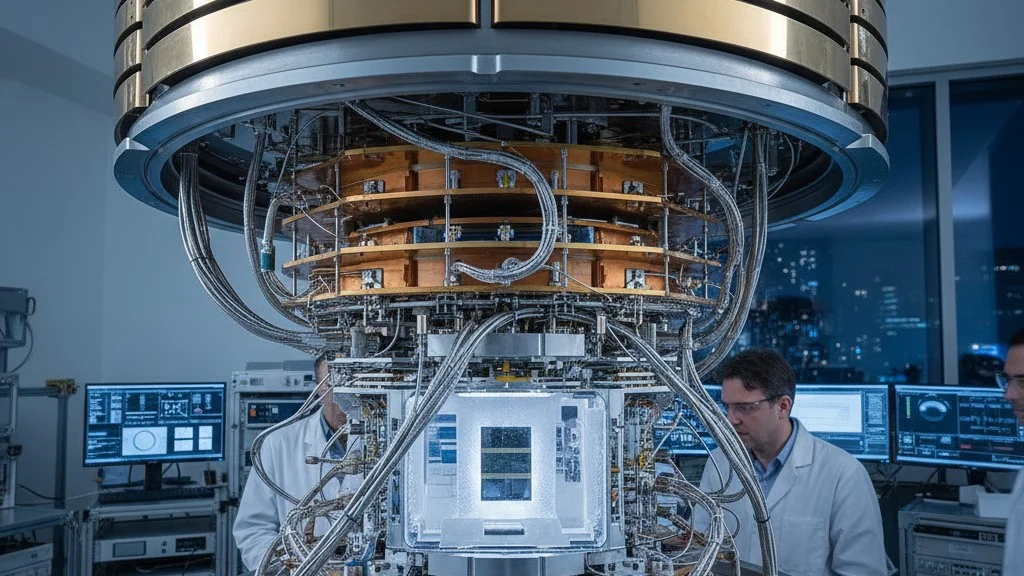
The team is working on superconducting quantum circuits that can maintain "coherence"—the state where quantum bits (qubits) can perform calculations—for longer periods. This is essential for the 2026 goal of achieving "quantum advantage," where a quantum machine can solve a problem that would take a traditional computer thousands of years to finish.
 Training the Next Generation of "Quantum Architects"
This collaboration isn't just about machines; it is about people. As Malaysia and the rest of the world move toward a digital-heavy economy, there is a massive shortage of experts who understand quantum mechanics.
The Fujitsu Science Tokyo hub will act as an academy, training graduate students and young researchers in specialized fields. These "Quantum Architects" will be the ones designing the secure networks and medical research tools of the future.
Core Objectives of the Research Hub:
- Hardware Innovation: Developing high-fidelity superconducting qubits.
- Error Correction: Creating software that can automatically fix "noise" during calculations.
- Talent Pipeline: Providing hands-on industry experience for Science Tokyo students.
- Commercial Use Cases: Finding applications in drug discovery, material science, and finance.
Why This Matters for the Global Economy
Quantum computing has the potential to revolutionize industries that Malaysians rely on every day. From optimizing logistics and supply chains to creating more efficient batteries for Electric Vehicles (EVs), the applications are limitless.
For example, a quantum computer could simulate new chemical structures in seconds, potentially leading to the discovery of life-saving medicines or new materials that are 100 times stronger than steel. Japan's decision to open this hub ensures that the Asia-Pacific region remains at the center of this technological gold rush.
The Roadmap to 2030
The joint research cluster has a clear timeline. By the end of 2026, they aim to demonstrate a prototype hardware system with improved error-handling capabilities. The long-term vision is to integrate quantum technology into Fujitsu’s existing cloud platforms, allowing businesses worldwide to access quantum power through the internet.
Interested tech enthusiasts can follow the Official Fujitsu Research Portal for technical whitepapers. As we look toward the next decade, the work being done in Tokyo today will likely define the speed of the global internet and the security of our digital lives for years to come.
Quick Facts: Quantum vs. Classical Computing
- Processing Power: Classical computers use bits (0 or 1); Quantum uses qubits (can be both at once).
- Speed: Tasks that take years for a PC can take seconds for a Quantum machine.
- Environment: Quantum chips often require temperatures colder than deep space to function.
- Security: Quantum tech could potentially break current encryption but also create "unhackable" codes.