Sports
F1 2026 Regulations: A New Era of Power and Speed for Fans in Malaysia
By ExFunCity · 12 May 2026

TL;DR — Explore the F1 2026 regulations and how the new power units and active aerodynamics will change the sport for Malaysian F1 fans.
Formula 1 2026 Power Unit Regulation Debut Preview
Formula 1 is entering a transformative period. For fans in Malaysia who have followed the sport since the days of the Sepang International Circuit, the upcoming 2026 season represents the biggest technical shift in decades. The F1 2026 regulations are not just a minor tweak; they are a complete reimagining of how a racing car generates power and cuts through the air. The goal is simple: to make the racing closer, more sustainable, and attractive to new car manufacturers. This reset provides a unique opportunity for teams currently trailing behind to leapfrog to the front of the grid.
The Big Shift to 50/50 Electrical Power
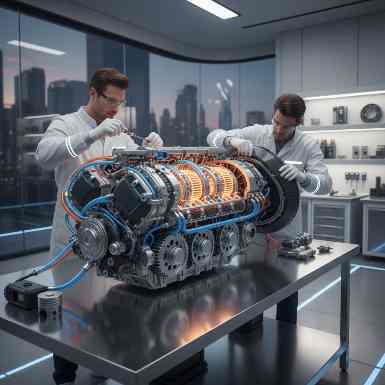
The heart of the F1 2026 regulations lies in the new power unit. While the 1.6-litre V6 turbocharged engine remains, the way it produces energy is changing drastically. Currently, the electrical component provides about 120kW of power. From 2026, this will jump to 350kW, creating a nearly 50/50 split between internal combustion and electric power. According to Formula 1 official technical specs, the complex MGU-H (Motor Generator Unit - Heat) will be removed to reduce costs and complexity. This change has already encouraged giant brands like Audi to join the sport and prompted Ford to partner with Red Bull Racing for their future engine program.
Sustainable Fuels and Environmental Impact
One of the most significant changes for the 2026 season is the move to 100% sustainable fuels. This is a massive step in F1’s goal to be Net Zero by 2030. These fuels are designed to be 'drop-in,' meaning they can be used in standard internal combustion engines without losing performance. This move is highly relevant to the automotive industry globally, as reported by Reuters, because it proves that high-performance engines can run without fossil fuels. For the average driver in Malaysia, this technology could eventually trickle down to commercial road cars, making green travel more accessible without losing the soul of the engine.
 Active Aerodynamics and Smaller Cars
To compensate for the change in power delivery, the cars themselves are getting a makeover. The 2026 cars will be lighter and narrower, aiming to improve agility and wheel-to-wheel racing. A major feature will be 'Active Aerodynamics.' This involves movable front and rear wings that shift positions to reduce drag on straights and increase downforce in corners. These changes are detailed extensively on Motorsport.com, explaining how the 'X-mode' and 'Z-mode' wing settings will replace the traditional DRS system. The goal is to ensure that cars can follow each other closely without losing grip in the 'dirty air' created by the car in front.
Reshuffling the Competitive Balance
Whenever there is a major rule change, the pecking order tends to shake up. We saw this in 2022, and 2026 promises an even bigger disruption. Heavyweights like Mercedes and Ferrari are investing heavily to reclaim the top spot, while Honda prepares to move its expertise to the Aston Martin team. For Malaysian fans, this means more excitement and less predictability. It is no longer just about who has the most money, but who can interpret these complex F1 2026 regulations most effectively.
Key takeaways of the 2026 changes:
- Removal of the MGU-H to simplify the engine.
- Increased battery power to 350kW.
- Introduction of 100% carbon-neutral fuels.
- Shorter wheelbase and narrower car width.
- Manual override boost to help with overtaking maneuvers.