News
Bursa Malaysia Slips Below 1,700 Level Amid Failed US-Iran Peace Talks
By ExFunCity · 13 Apr 2026
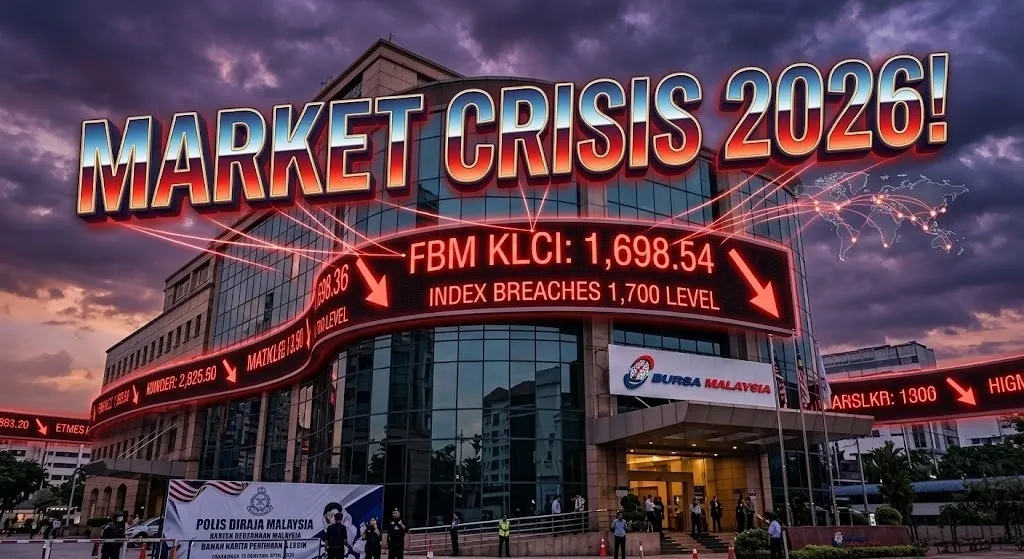
TL;DR — Bursa Malaysia's FBM KLCI fell below 1,700 today. Failed US-Iran peace talks and rising oil prices sparked a sell-off in the local stock market.
Bursa Malaysia Slips Below 1,700 Level Amid Failed US-Iran Peace Talks
The Malaysian stock market faced a difficult start to the week as the benchmark FBM KLCI index fell below the key 1,700-point level. This sharp decline follows news from Islamabad that high-level peace negotiations between the United States and Iran ended without an agreement. Investors in Kuala Lumpur reacted quickly to the growing uncertainty, leading to a broad sell-off across most sectors. The failure of these talks has sparked deep concerns about the safety of global trade routes and the possibility of a prolonged conflict in the Middle East, which directly impacts Malaysia's trade-dependent economy.
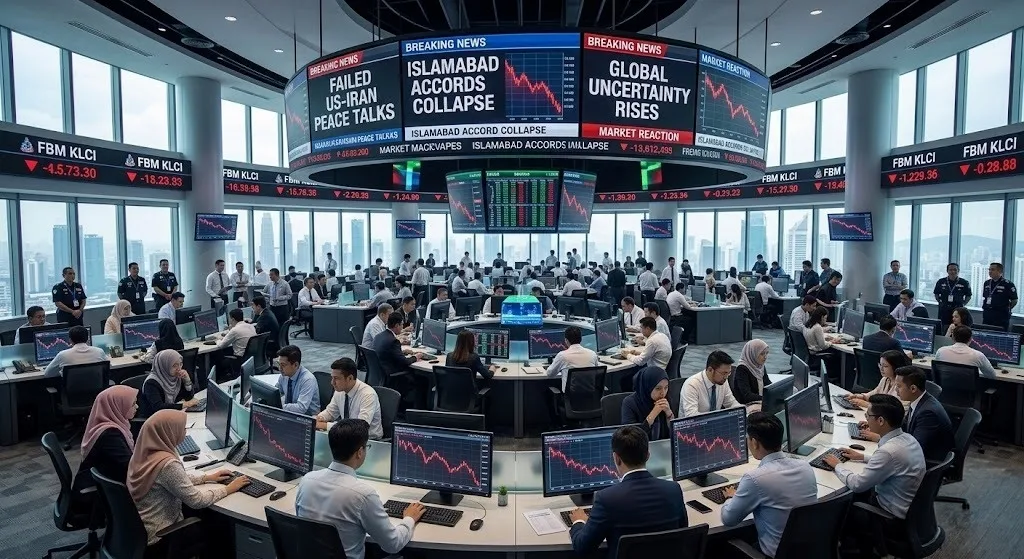
Market Reaction to Geopolitical Uncertainty
The FBM KLCI opened lower this morning and continued to slide as news of the failed talks spread. By the midday break, the index had breached the psychological support level of 1,700 points. Analysts noted that the "wait-and-see" approach previously held by investors has turned into a rush for safety. Most blue-chip stocks in the banking and plantation sectors saw significant drops, as these industries are highly sensitive to global economic shifts.
Factors driving the current market sell-off include:
- Loss of Investor Confidence: The collapse of the Islamabad talks suggests that diplomatic solutions are moving further away.
- Capital Outflow: Foreign investors are moving funds out of emerging markets like Malaysia and into "safe-haven" assets like gold and the US Dollar.
- Increased Volatility: High-frequency trading and panic selling have contributed to rapid price swings throughout the day.
Rising Oil Prices and Inflationary Fears
While Malaysia is a net exporter of oil and gas, the surge in global crude prices—now exceeding US$100 per barrel—is seen as a "double-edged sword." While it brings more revenue to the government, it also raises the cost of transportation and manufacturing. Investors fear that a planned US naval blockade in the Strait of Hormuz will lead to even higher energy costs, which could lead to "stagflation" (slow growth combined with high inflation) in the local market.

Impact on the Manufacturing Sector
Local manufacturers are particularly worried about the cost of raw materials. As shipping insurance rates climb due to the heightened risk in the Gulf, the cost of importing components for Malaysia's electronics industry is expected to rise. This has led to a sell-off in technology stocks on Bursa Malaysia, as profit margins are predicted to shrink in the coming months.
Banking and Financial Stocks Under Pressure
The financial sector, which often serves as a barometer for the overall economy, led the losses today. Major banks saw their share prices dip as traders prepared for a potential slowdown in loan growth. If global trade is disrupted, local businesses may delay expansion plans, leading to lower demand for corporate credit. However, Bank Negara Malaysia (BNM) has reassured the public that the local banking system remains resilient with strong capital buffers to withstand these global shocks.
Outlook and Strategy for Investors
Market experts suggest that the 1,700 level on the FBM KLCI was a critical technical floor. Now that it has been broken, the next support level is estimated to be around 1,680 points. Investors are advised to stay calm and avoid panic selling, as markets often overreact to initial geopolitical news. For long-term investors, this downturn may present an opportunity to "buy the dip" in high-quality companies that have strong fundamentals and low debt.
Monitoring Government Intervention
The Malaysian government is expected to monitor the situation closely. If the market continues to fall rapidly, government-linked investment companies (GLICs) may step in to provide support to the local bourse. For now, all eyes remain on the evolving situation in the Middle East and any new diplomatic efforts that might emerge to replace the failed Islamabad Accords.