News
Bank Indonesia Faces High Pressure Action Over Record Low Rupiah Crash
By ExFunCity · 19 May 2026
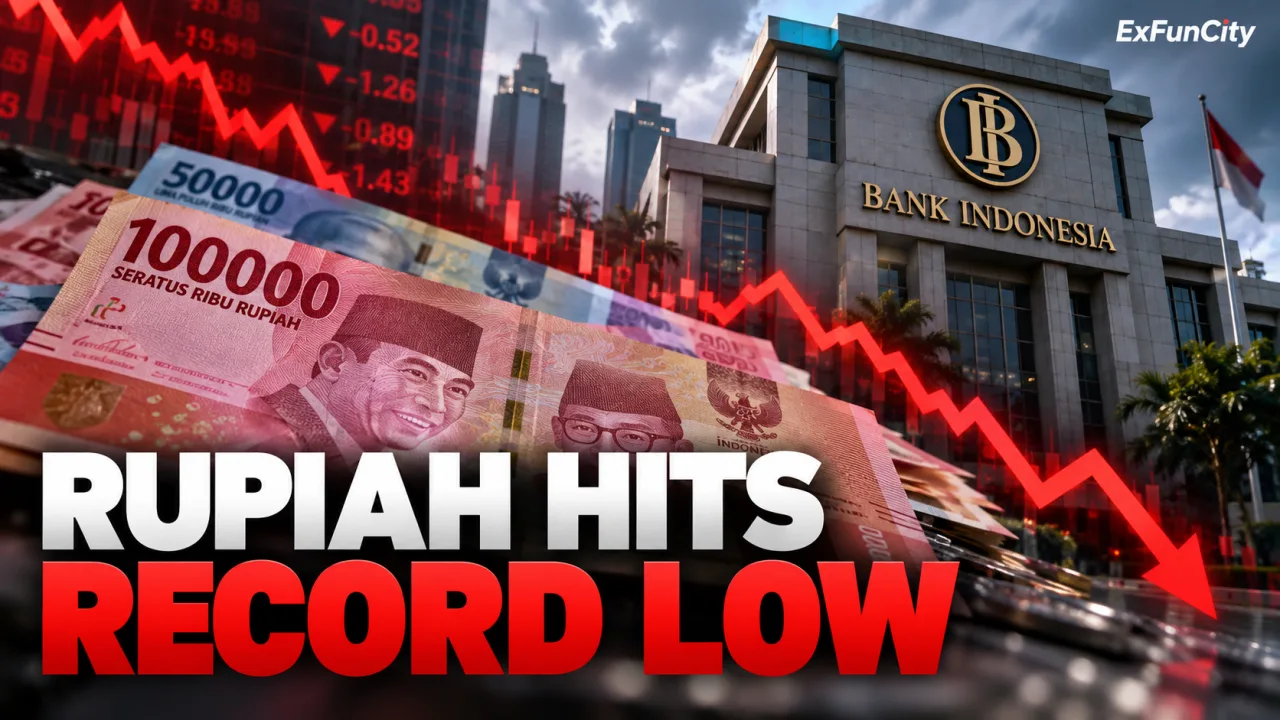
TL;DR — The Indonesian Rupiah has hit an all-time low of Rp17,645 against the US Dollar. Find out how Bank Indonesia plans to defend the currency with an interest rate.
 Bank Indonesia Under Extreme Pressure to Raise Rates as Rupiah Crashes to Record Low
Southeast Asia is watching Jakarta closely this week. Bank Indonesia is preparing to make a critical interest rate decision as the Indonesian Rupiah plummets to its weakest value in history. Financial markets are heavily betting that the central bank will have to abandon its holding pattern and push a sharp rate hike to stop massive cash outflows.
The Sudden Crash of the Rupiah Explained
The Indonesian currency shocked regional markets by tumbling down to a historic low of Rp17,645 against the US Dollar. This sudden drop marks a steep year-to-date depreciation of nearly 6% for the currency.
The main cause behind this rapid decline is the combination of rising global crude oil prices and high geopolitical tension in the Middle East. Because Indonesia imports a large amount of oil daily, expensive global energy costs are putting heavy pressure on its trade balance and forcing international investors to pull their money out of emerging Asian markets.
Fast Facts on Indonesia's Financial Position:
- The Rupiah hit a historic low of Rp17,645 per US Dollar.
- Foreign currency reserves dropped significantly from USD 156 billion to USD 146.2 billion due to recent central bank market defense.
- Global Brent crude oil prices jumped past USD 111 per barrel, creating a tough situation for Southeast Asian oil importers.
 Parliament Demands Aggressive Action from Central Bank
The record-shattering currency drop has caused panic inside Indonesia’s parliament. Lawmakers from Commission XI have openly questioned the central bank’s strategy, expressing fear that using foreign reserves to buy up Rupiah is burning through the nation's emergency cash too fast.
Many local economists believe Bank Indonesia’s previous benchmark rate of 4.75% is no longer enough to keep investors interested. To prevent the currency from sliding further towards the feared Rp18,000 mark, experts state that a 25-to-50 basis point hike is absolutely necessary at the upcoming Board of Governors meeting.
What This Economic Shift Means for Malaysia
A weakened Rupiah and a struggling Indonesian economy can quickly spill over to cause issues in Malaysia. Since Indonesia is one of Malaysia’s largest regional trading partners, a drop in their purchasing power could hurt local export numbers.
Furthermore, Malaysian businesses operating across the border will see lower earnings when converting profits back into Ringgit. Investors are currently monitoring the official Bank Indonesia Data Portal to see how aggressive the upcoming monetary adjustments will be.