News
B40 Commuters Save RM50 Monthly via 'Green Transit' Rebate Scheme
By ExFunCity News Desk · 18 Apr 2026
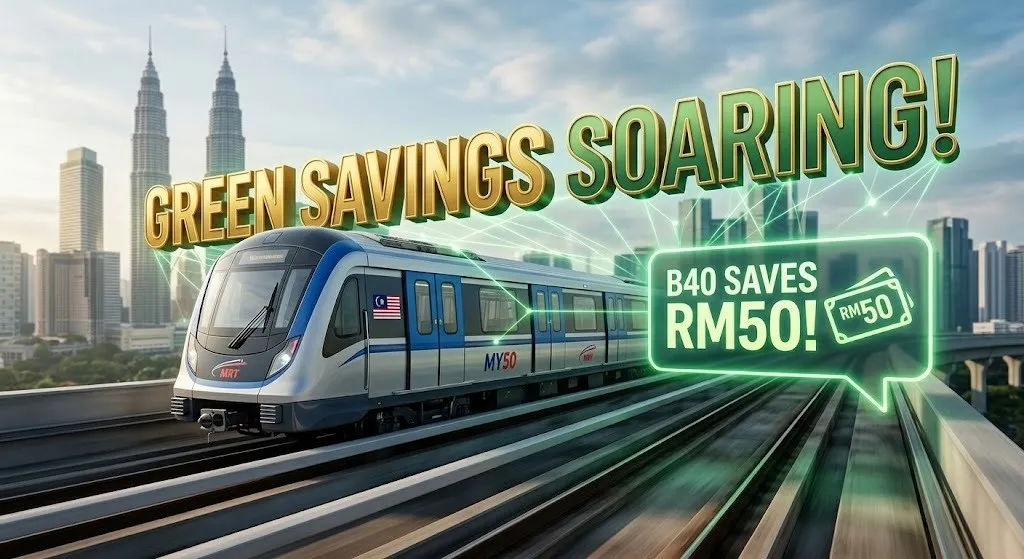
TL;DR — MOT confirms B40 households are saving an average of RM50 monthly through the 'Green Transit' 50% discount on public transport, easing living costs in April.
B40 Commuters Save RM50 Monthly via 'Green Transit' Rebate Scheme
The government's 'Green Transit' rebate scheme is already delivering tangible financial relief to low-income households, with average B40 commuters saving approximately RM50 per month on transportation costs. Transport Minister Anthony Loke provided this update today, April 18, 2026, highlighting the scheme's success just weeks after its implementation. By offering a 50% discount on all LRT, MRT, and KTM services, the initiative effectively protects vulnerable communities from the inflationary impact of soaring global fuel prices.
Direct Financial Relief for Low-Income Households
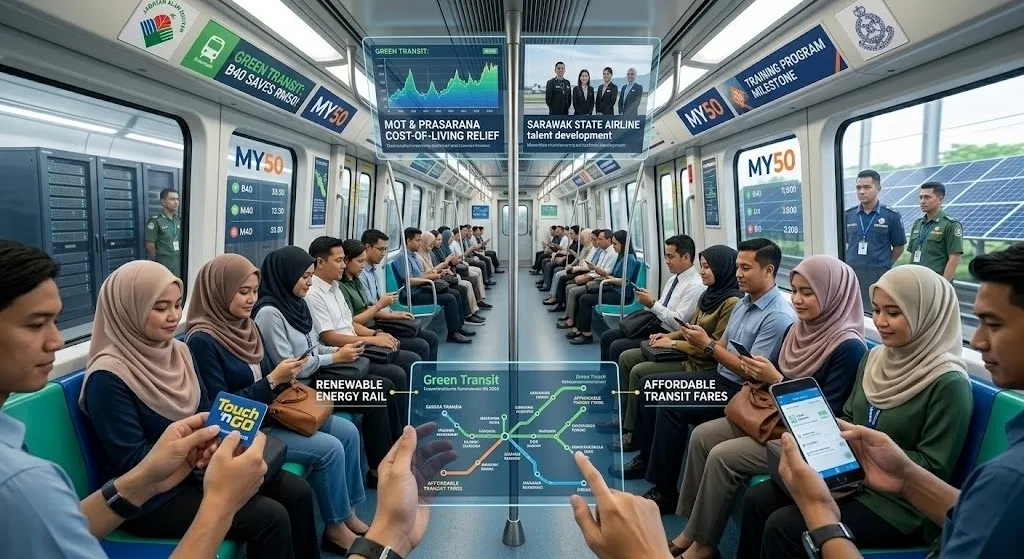
The 'Green Transit' rebate was introduced as a targeted measure to help the B40 group navigate the "cost of living" crisis exacerbated by Middle East tensions. By slashing daily transit fares in half, a typical worker commuting from suburban areas like Rawang or Kajang to Kuala Lumpur can save significant amounts. A monthly saving of RM50 represents a meaningful percentage of disposable income for a B40 household, potentially covering essential groceries or utility bills.
Key details from the Minister's update include:
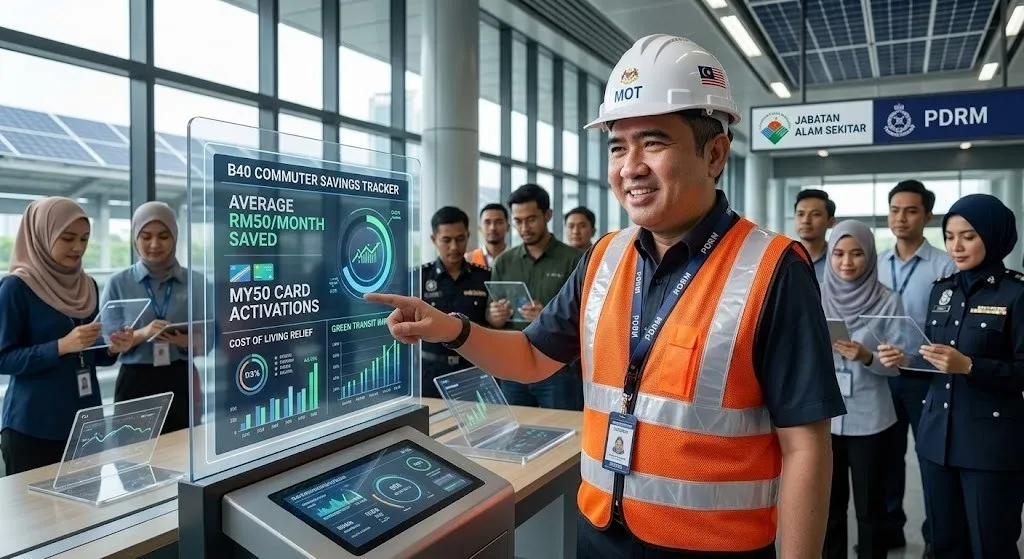
- Utilization Rate: Over 120,000 unique My50 cardholders have successfully activated the 'Green Transit' rebate.
- Highest Savings Corridor: Commuters using the KTM Komuter lines have reported the highest percentage savings.
- User Feedback: Initial surveys show 92% satisfaction among users, citing "reduced daily financial stress."
- System Integration: The rebate is seamlessly integrated with existing Touch 'n Go and MyJPJ digital interfaces.
Synergizing with My50 and Green Energy Initiatives
Minister Loke clarified that the 'Green Transit' rebate works in tandem with the existing My50 unlimited travel pass. It provides an additional layer of targeted subsidy. For eligible B40 users, the cost of the My50 pass itself is effectively halved, or they receive direct cashback proportional to their 50% discount on pay-as-you-go rides. This scheme is funded partly by the energy savings generated by the ministry's fast-tracked solar rail projects, illustrating a sustainable economic cycle.
Shifting Commuter Behavior Toward Sustainability
Beyond immediate financial relief, the scheme is successfully encouraging a modal shift from private vehicles to public transport. Transport Ministry (MOT) data shows a 15% increase in B40 ridership on the MRT Putrajaya Line since the rebate launch. Commuters are choosing the "green" alternative not just because it is cheaper, but because the solar-powered trains offer a more reliable and affordable alternative when petrol prices are hovering near record highs.
The 'Green Transit' rebate also helps reduce urban congestion. Fewer private cars on the road mean shorter travel times and lower overall carbon emissions for the Klang Valley. This aligns perfectly with Malaysia’s net-zero transition goals, proving that social welfare and environmental sustainability can be mutually reinforcing.
Future Outlook and Ongoing Expansion
The MOT is working closely with Prasarana and KTMB to ensure the transit network can handle the increased demand. Plans are underway to increase train frequency during peak hours and expand feeder bus services to first-and-last-mile locations. The 'Green Transit' scheme will undergo a comprehensive review in six months, with potential expansion to other major urban centers like Penang and Johor Bahru by late 2026. For now, the focus remains on ensuring that the B40 group has a "sovereign" right to affordable and sustainable mobility.